Abu Dhabi
Abu Dhabi Healthcare Readiness in Focus as Exhibition Showcases 100-Bed Floating Hospital
Abu Dhabi healthcare readiness was the central theme at an exhibition alongside the World Congress on Military Medicine, where officials and companies presented systems and equipment for crises and disasters.
By Amani Khan
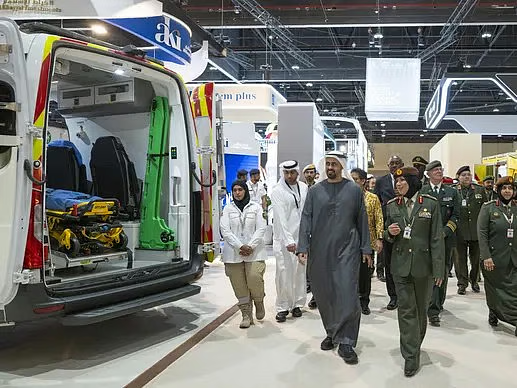
Abu Dhabi officials set out how the emirate prepares its healthcare system for emergencies and disasters at an exhibition held alongside the World Congress on Military Medicine, where a 100-bed floating hospital was also showcased.
The event placed Abu Dhabi healthcare readiness before an international audience of experts, specialists and decision-makers in military medicine. Participating medical and military organisations presented projects, initiatives and innovations aimed at improving treatment services and strengthening emergency response.
Wide participation at the military medicine exhibition
The exhibition drew wide participation from medical and military organisations and institutions. Participants showed a range of specialised projects in healthcare and military medicine, highlighting technologies and medical solutions designed to improve treatment and to enhance preparedness for crises and disasters.
It gave participating organisations a platform to present their work to an international gathering. It also offered a chance to show technologies intended to improve healthcare quality and modernise the delivery of medical services, particularly in field settings and exceptional circumstances.
For background, see our report on the ICMM World Congress of Military Medicine opening in Abu Dhabi with delegates from 120+ countries.
The Abu Dhabi model for emergency preparedness
Dr Salama Al Tamimi, Executive Director of the Emergency Preparedness and Response Sector at the Abu Dhabi Public Health Centre (ADPHC), said readiness should be judged on more than speed. "In Abu Dhabi, we believe that the readiness of a healthcare system is measured not only by the speed of its emergency response, but also by its ability to anticipate, prepare for and manage risks efficiently."
Dr Al Tamimi said the emirate continues to work with its partners on a connected approach. "With this in mind, we continue to work with our partners to develop a smart, interconnected healthcare ecosystem that brings together different medical functions, from technology to emergency services. This enables early intervention, improves the quality of care and protects the health and safety of our community."
Read more: our report on Abu Dhabi showcasing an intelligent medical emergency response system at the global military medicine congress.
Unified Medical Operations Command system
The Department of Health – Abu Dhabi (DoH), working with government entities and public and private healthcare institutions, developed the Unified Medical Operations Command (UMOC) system. It serves as a central hub for coordinating medical responses and managing emergencies across the emirate.
In February 2025, His Highness Sheikh Khaled bin Mohamed bin Zayed Al Nahyan, Crown Prince of Abu Dhabi and Chairman of the Abu Dhabi Executive Council, reviewed the system. It is designed to create a smart, integrated healthcare model capable of managing emergencies, crises and disasters efficiently and accurately.
The Unified Medical Operations Command system connects every stage of medical response. These stages run from the initial emergency response outside hospitals and patient transport to referrals, hospital admissions and the coordination of treatment services within healthcare facilities. This helps ensure that all relevant organisations work together effectively.
It also supports the monitoring and coordinated use of strategic medical resources, allowing authorities to make timely, informed decisions. This is particularly important during major incidents that require several healthcare institutions to deploy their resources at the same time.
Medical supplies and the test of resilience
An important measure of readiness is the availability of strategic reserves of medicines, medical supplies and equipment. Healthcare institutions must also be able to secure essential supplies during crises that disrupt supply chains, transport and distribution.
Major emergencies can require large quantities of medicines, intravenous fluids, antibiotics, surgical and anaesthesia supplies, ventilators and protective equipment. Specialised supplies are also needed to treat burns and serious injuries.
Keeping services running also depends on backup arrangements for electricity, water, communications and digital systems. These are essential to ensure that laboratories, intensive care units (ICUs) and operating theatres continue functioning even when basic services are disrupted.
The UMOC system helps coordinate strategic medical resources and monitor the sector's needs. Assessing true preparedness, however, also requires examining the size of available stockpiles, how long they would last under different emergency scenarios, how quickly supplies can be replenished and what alternatives exist if a supply source is disrupted.
For wider context on the sector, see our coverage of health insurance claims in the Gulf jumping 36% in three years as prevention takes centre stage.
Floating hospital with 100 beds
Marwan Al Koumi of Gulf Pharmaceutical Industries (Julphar) said the company presented several major medical projects and initiatives at the congress. One of the key projects was the "Medical Ship", a fully equipped floating hospital fitted with advanced medical facilities and technology. He said the vessel can sail to any country and be deployed according to operational requirements and directives.
Al Koumi said the floating hospital with 100 beds offers a range of medical and treatment services comparable to those found in specialised hospitals. The project aims to strengthen medical and relief capabilities, providing healthcare and emergency response services to regions and countries in need of support.
He said participation in the congress was particularly important because it brings together military medical experts and professionals from around the world. He added that such initiatives can expand access to medical services in areas where they are needed most, while highlighting the humanitarian role of military medicine and the importance of international cooperation in responding to health emergencies.
Medical Ship capacity
| Feature | Detail |
|---|---|
| Beds | 100 |
| Operating theatres | Three |
| Intensive care units | 10 |
| Helipad | Dedicated, to support rapid evacuation of critically ill and injured patients |
| Deployment | Can sail to any country, according to operational requirements and directives |
Urgent Medical Services unit
Amr Al Najjar of MEAD Medical said the company showcased its Urgent Medical Services unit at the exhibition. The specialised unit is designed to handle injuries and medical emergencies, particularly at disaster sites and during crises where rapid response and on-site treatment are essential.
Key facts at a glance
| Item | Detail |
|---|---|
| Event | Exhibition held alongside the World Congress on Military Medicine, Abu Dhabi |
| Emergency coordination system | Unified Medical Operations Command (UMOC), developed by the Department of Health – Abu Dhabi |
| System reviewed | February 2025, by Sheikh Khaled bin Mohamed bin Zayed Al Nahyan |
| Spokesperson on preparedness | Dr Salama Al Tamimi, Abu Dhabi Public Health Centre |
| Floating hospital presented by | Gulf Pharmaceutical Industries (Julphar) |
| Urgent Medical Services unit shown by | MEAD Medical |
Health policy and public guidance are published by the Ministry of Health and Prevention, and wider public information is available on the UAE Government portal.
Elsewhere in the emirate, our report on a fire at a warehouse in Abu Dhabi's Al Mafraq Industrial Area illustrates the type of incident for which emergency services plan.
Frequently Asked Questions
What is the Unified Medical Operations Command system?
The Unified Medical Operations Command (UMOC) system is a central hub for coordinating medical responses and managing emergencies across Abu Dhabi. The Department of Health – Abu Dhabi developed it with government entities and public and private healthcare institutions.
What does the Medical Ship offer?
Gulf Pharmaceutical Industries (Julphar) presented the Medical Ship as a floating hospital with 100 beds, three operating theatres, 10 intensive care units and a dedicated helipad. Marwan Al Koumi said it can sail to any country and be deployed according to operational requirements and directives.
Who reviewed the UMOC system in February 2025?
His Highness Sheikh Khaled bin Mohamed bin Zayed Al Nahyan, Crown Prince of Abu Dhabi and Chairman of the Abu Dhabi Executive Council, reviewed the system in February 2025.
Filed under
- Abu Dhabi health
- Department of Health Abu Dhabi
- emergency preparedness
- Healthcare UAE
- Julphar
- MEAD Medical
- military medicine
Comments
No comments yet. If you know something about this story that we do not, the newsroom would rather hear it directly — get in touch.