Feature
Al Jahili Fort: The 1890s Masterpiece Hiding a Secret Cooling System in Plain Sight
Al Jahili Fort, one of the largest forts in the UAE, has become a year-round cultural destination in Al Ain after a 2007 conservation project won the Terra Award.
By Amani Khan
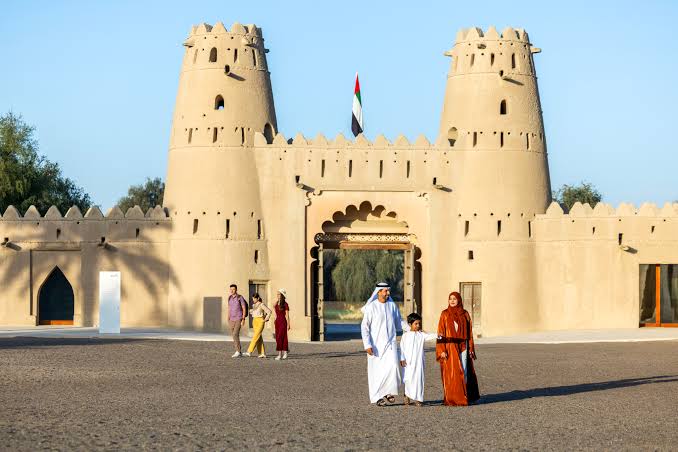
Al Jahili Fort in Al Ain, built in the 1890s, keeps its rooms comfortable with hidden chilled-water pipes installed in a 2007 conservation project that won the Terra Award in 2016. The pipes run beneath the mud plaster, out of sight of visitors.
They exist for a simple reason: summer temperatures in Al Ain can reach 50°C. The 2007 project turned one of the UAE's largest mud-brick forts into a year-round cultural destination.
Al Jahili Fort at a glance
The table below summarises the main dates and facts in the history of the fort.
| Fact | Detail |
|---|---|
| Location | Al Ain |
| Construction | Work began in 1891 and was completed in 1898 |
| Built on the orders of | His Highness Sheikh Zayed bin Khalifa Al Nahyan, known as Zayed the First |
| Rule of Sheikh Zayed bin Khalifa Al Nahyan | Abu Dhabi, 1855 to 1909 |
| Early restoration | 1985 |
| Conservation project | 2007, led by the Department of Culture and Tourism – Abu Dhabi |
| North gate rebuilt | 2013 |
| Award | Terra Award, Terra Lyon, 12th World Congress on Earthen Architectures, 2016 |
A summer retreat with a purpose
The fort was built on the orders of His Highness Sheikh Zayed bin Khalifa Al Nahyan, known as Zayed the First, who ruled Abu Dhabi from 1855 to 1909. Each summer the emirate's rulers left the humid coast for Al Ain, which offered drier air, fertile land and fresh water.
Sheikh Zayed owned a farm in the area. The fort served both as his summer residence and as a means of keeping watch over the tribes of the area.
The fort is built of sun-dried mud brick. An inscription over the south gate dates the inner square fort to the period between 1891 and 1898. Alongside it stands a separate round tower of several tiers, each narrower than the one below. Together, the square fort and the tower are the oldest parts of the complex.
A history of many uses
After the death of Sheikh Zayed, his eldest son, His Highness Sheikh Khalifa bin Zayed bin Khalifa Al Nahyan, chose not to become ruler of Abu Dhabi. He stayed in Al Ain and lived in the fort with his family.
By the mid-twentieth century the fort had passed into military hands. The buildings had fallen into disrepair by 1955, when Sheikh Shakhbut offered them to the Trucial Oman Levies. Barracks and other buildings were added, and military use continued into the early 1970s, when the fort was handed to the Union Defence Force.
Early restoration work was carried out on the fort in 1985. Restoration in the 1980s created a single large courtyard, which is now used for classical music concerts and public events. It also added the present monumental entrance flanked by towers. The new work followed local tradition, with mud-brick walls beneath palm-log roofs.
For background on cultural programming in the capital, see our coverage of Abu Dhabi's museum adventures for children during Early Childhood Week 2026.
The 2007 conservation project and earthen architecture
The 2007 project was led by the Department of Culture and Tourism – Abu Dhabi. It aimed to preserve the historic fabric while turning the most recent parts of the building into a place people could visit. Archaeological investigation guided the work throughout.
The chilled-water pipes supplement the thermal qualities of the thick earth walls. They keep the rooms around the arcaded gallery comfortable.
The project's backers describe it as the first of its kind to combine traditional and modern technologies in a large historic mud-brick building. They also describe it as a model for adapting old structures to modern needs across the UAE and the region.
The project made an argument about materials as well. Earth and the by-products of the date palm, the staples of traditional building in Al Ain, are green and recyclable. In 2016 the project won the Terra Award at Terra Lyon, the 12th World Congress on Earthen Architectures, a recognition for earthen architecture.
Later conservation work in 2013 rebuilt the north gate of the nineteenth-century enclosure. It used archaeological evidence and historic photographs.
Read more: our report on the reopening of the Museum of the Future in 2027 and Dubai's focus on human skills in the AI age.
What visitors find inside
The courtyard is arranged around three wings. Each has a distinct function.
| Wing | Contents |
|---|---|
| North | Permanent exhibition of black-and-white photographs by the explorer Wilfred Thesiger, titled "Bin London and Freedom of the Desert" |
| West | Temporary exhibitions |
| South | Information centre for the fort and for Al Ain, a bookshop and a majlis |
Thesiger, with Emirati and Omani companions, twice crossed the Empty Quarter, the world's largest sand desert, in the 1940s.
The site as a whole gathers elements of mud-brick architecture that survive only singly elsewhere in the city. These are a round watchtower, a square fort with corner towers, two large walled enclosures and a mosque outside the walls. Archaeologists have also uncovered the remains of a falaj, the covered channel that once carried water to the fields.
Standing at the centre of Al Ain, the fort has become a symbol of Abu Dhabi's architectural heritage. Guided tours are available for individuals, families and school groups.
For other ways to explore the emirate, see our guide to six of the best places to cycle in Abu Dhabi this season.
Planning a visit
Visitors who plan to tour the fort can arrange guided tours as individuals, families or school groups.
Because conditions in Al Ain can be hot in summer, forecasts are worth checking before a trip. Read more: our report on the UAE weekend weather outlook.
For background, see our coverage of the ICMM World Congress of Military Medicine opening in Abu Dhabi with delegates from 120+ countries.
Frequently Asked Questions
When was Al Jahili Fort built?
Work on Al Jahili Fort began in 1891 and was completed in 1898. An inscription over the south gate dates the inner square fort to this period.
Who ordered the construction of the fort?
The fort was built on the orders of His Highness Sheikh Zayed bin Khalifa Al Nahyan, known as Zayed the First, who ruled Abu Dhabi from 1855 to 1909. It served as his summer residence and as a means of keeping watch over the tribes of the area.
What award did the conservation project win?
The 2007 conservation project won the Terra Award in 2016 at Terra Lyon, the 12th World Congress on Earthen Architectures.
What can visitors see at the fort?
The north wing houses a permanent exhibition of Wilfred Thesiger's photographs, the west wing hosts temporary exhibitions, and the south wing holds an information centre, a bookshop and a majlis. Guided tours are available for individuals, families and school groups.
How is the fort kept comfortable in summer?
Chilled-water pipes hidden beneath the mud plaster supplement the thermal qualities of the thick earth walls. They keep the rooms around the arcaded gallery comfortable.
Filed under
- Abu Dhabi culture
- Al Ain heritage
- Al Jahili Fort
- Earthen architecture
- Terra Award
- UAE forts
- Wilfred Thesiger
Comments
No comments yet. If you know something about this story that we do not, the newsroom would rather hear it directly — get in touch.