Feature
SpaceX Starship Reaches Orbit on 15th Test Flight, but Booster Catch Is Aborted
SpaceX Starship entered Earth's orbit on Friday, 13 November, while a problem with the Super Heavy booster ended the planned recovery and left the first spaceship catch as the next test.
By Amani Khan
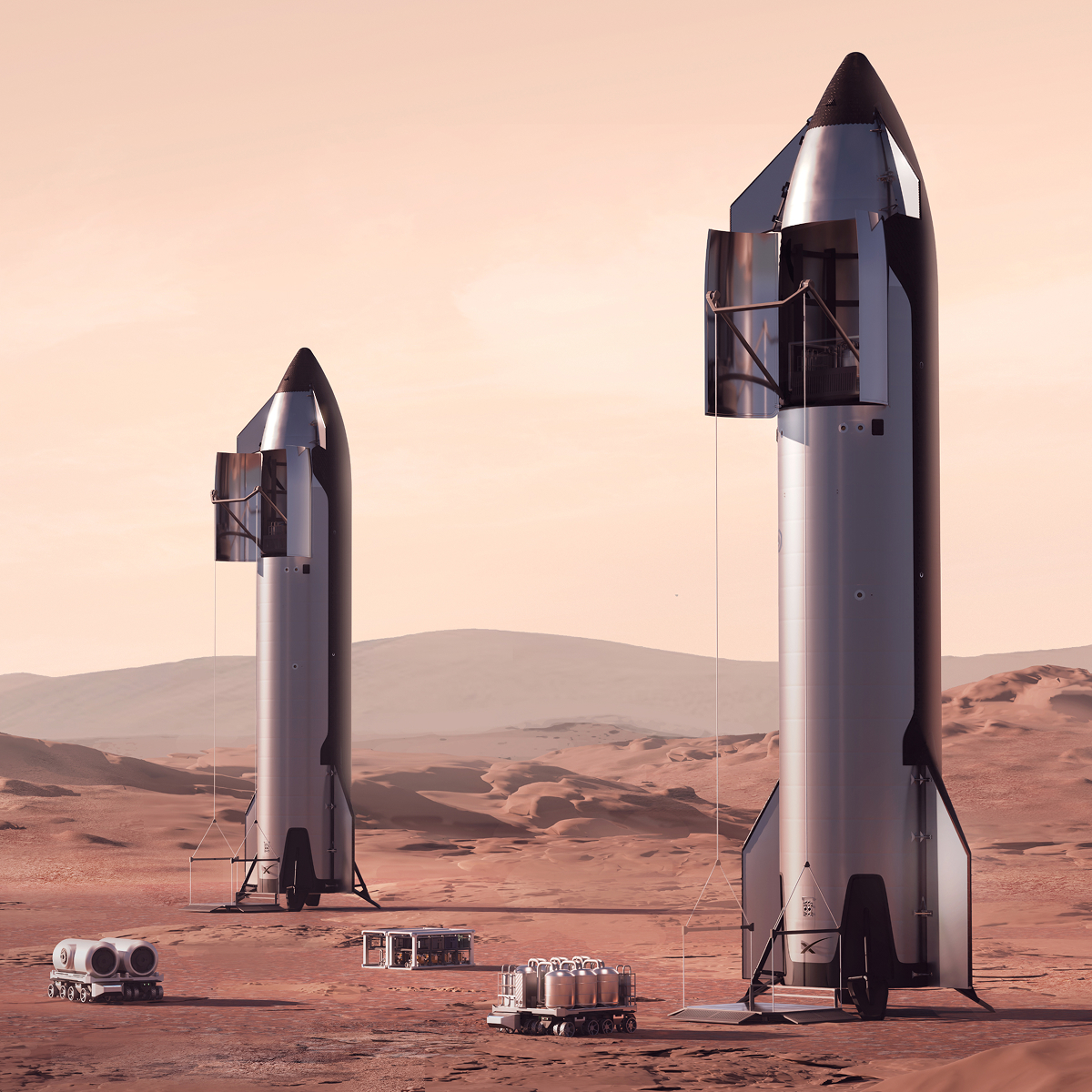
SpaceX's Starship entered Earth's orbit on Friday, 13 November, on its 15th test flight from Starbase in southern Texas, but the company aborted the recovery of its Super Heavy booster. An unspecified problem forced the change of plan.
The SpaceX Starship, the world's biggest and most powerful rocket at 124 metres, lifted off. Minutes later, the landmark nature of the mission went awry when the booster could not be brought back to the launch site.
Booster diverted to an offshore splashdown
After lift-off and the mid-air separation of the two stages, an issue with the Super Heavy booster forced SpaceX to divert it to an "offshore splashdown". That scuttled what would have been a twin capture of both components of the rocket.
A fireball erupted as the booster fell into the Gulf of Mexico near the launch site. A section of it was left sticking out vertically afterwards.
"Not sure right now why we weren't able to bring it back," SpaceX's Dan Huot said. SpaceX has caught the Super Heavy booster three times previously.
Starship spacecraft continues in orbit
The Starship spacecraft, which gives the rocket system its name, entered Earth's orbit. It was expected to circle the globe 14 times before returning on Saturday.
"Starship and its heatshield are healthy as the vehicle continues to orbit Earth," SpaceX said around seven hours after the mission started. "We're not tracking any issues right now with the vehicle or with the range for our return, so everything continuing to look good," Huot said.
While in space, the spacecraft launched 26 satellites to join others in Musk's Starlink satellite internet constellation. Some versions of Starship are designed to launch internet satellites and data centres into orbit, while other versions will be built to carry people to the Moon and Mars.
Key facts from the 15th test flight
| Item | Detail |
|---|---|
| Launch date | Friday, 13 November |
| Launch site | Starbase, southern Texas |
| Rocket height | 124 metres |
| Test flight number | 15th |
| Super Heavy booster | Diverted to an offshore splashdown in the Gulf of Mexico |
| Previous booster catches | Three |
| Planned orbits | 14 |
| Satellites launched | 26, to join the Starlink constellation |
| Planned flight time before return | More than 22 hours |
| Planned Starship recovery | Around 3:20 pm (2120 GMT) on Saturday, 14 November, at the launch site |
Planned return and first spaceship catch
SpaceX plans to bring Starship back to Earth after more than 22 hours of flight. It aims to recover the vehicle at around 3:20 pm (2120 GMT) on Saturday, 14 November, at the launch site.
The catch is extraordinarily complex because the spaceship will fall much faster and from a much higher altitude than the booster. The vessel must also withstand the extreme heat of reentering Earth's atmosphere. As with the three earlier Super Heavy recoveries, Starship is meant to carry out a controlled descent and nestle between two mechanical "chopstick arms" at the launch site.
"We'll only go for it if the ship passes all of these system checks and decision gates along the way, and there are lots of them," SpaceX's Kate Tice said. Because of the risk of losing control of Starship, SpaceX has planned scenarios in which it would shorten the test flight and plunge the spaceship into the Pacific Ocean if necessary.
Reaction and what the mission means
Successful recoveries of both Starship and its booster would have marked a milestone in the space industry's decades-long pursuit of fully reusable rocket systems. Such systems can drastically reduce mission costs and make frequent launches possible.
Clayton Swope, an aerospace expert at the Center for Strategic and International Studies, called the mission a "mixed bag so far" after the failure to catch the Super Heavy. "At least the Starship made it to orbit, like on the last test flight," he said.
US space agency NASA is counting on Starship to serve as a lunar lander on its Artemis mission. NASA administrator Jared Isaacman congratulated SpaceX on Friday for "another spectacular launch", without mentioning the booster disappointment.
Refuelling challenge and production capacity
The Starship project has been plagued by years-long delays as SpaceX grapples with novel engineering challenges. These include how to transfer fuel to the spaceship while in orbit, a requirement for any journey to the Moon or Mars.
SpaceX is investing heavily in stepping up production and launch capabilities following its stock market debut in June, which raised about $85.7 billion. During a tour of its factory at Starbase on Friday, SpaceX officials told journalists that the company can now produce a spaceship every two weeks and a booster every four weeks.
SpaceX's Falcon rockets, which are partially reusable, are regularly used to launch satellites and carry astronauts to the International Space Station.
Related coverage
Technology disruption has featured in recent reporting. Read more: our report on Microsoft Apologises for Global Outage as Outlook Users in UAE See Recovery.
For background, see our coverage of Claude Outage: Anthropic Confirms Login Problems on Claude.ai and Claude Code.
On engineering and infrastructure in the region, see UAE Ranks Fifth Globally and First in MENA in 2026 Quality Infrastructure Index.
Read more: our report on Abu Dhabi Healthcare Readiness in Focus as Exhibition Showcases 100-Bed Floating Hospital.
Also from our coverage: Abu Dhabi Performs 779 Organ Transplants in 2026, Up 23.5 Per Cent on All of Last Year.
Official UAE news and services are available through the UAE Government portal and the Emirates News Agency.
Frequently Asked Questions
Did the SpaceX Starship reach orbit?
Yes. The Starship spacecraft entered Earth's orbit after launching on Friday, 13 November, and was expected to circle the globe 14 times before returning on Saturday.
Why was the Super Heavy booster not caught?
An unspecified problem with the booster forced SpaceX to divert it to an offshore splashdown in the Gulf of Mexico. SpaceX's Dan Huot said the company was "not sure right now" why it could not bring the booster back.
When will Starship return to Earth?
SpaceX plans to recover Starship at the launch site at around 3:20 pm (2120 GMT) on Saturday, 14 November, after more than 22 hours of flight. It will attempt the catch only if the ship passes all system checks and decision gates.
Filed under
- Elon Musk
- NASA Artemis
- Reusable rockets
- Space industry
- SpaceX
- Starlink
- Starship
Comments
No comments yet. If you know something about this story that we do not, the newsroom would rather hear it directly — get in touch.