Business
Four ASEAN Members Agree to Regional Oil Stockpiling Plan as UAE Expresses Interest
ASEAN oil stockpiling moved a step closer after four Southeast Asian states agreed to take part in a proposed shared-reserve scheme, though no start date or operating mechanism has been set.
By Amani Khan
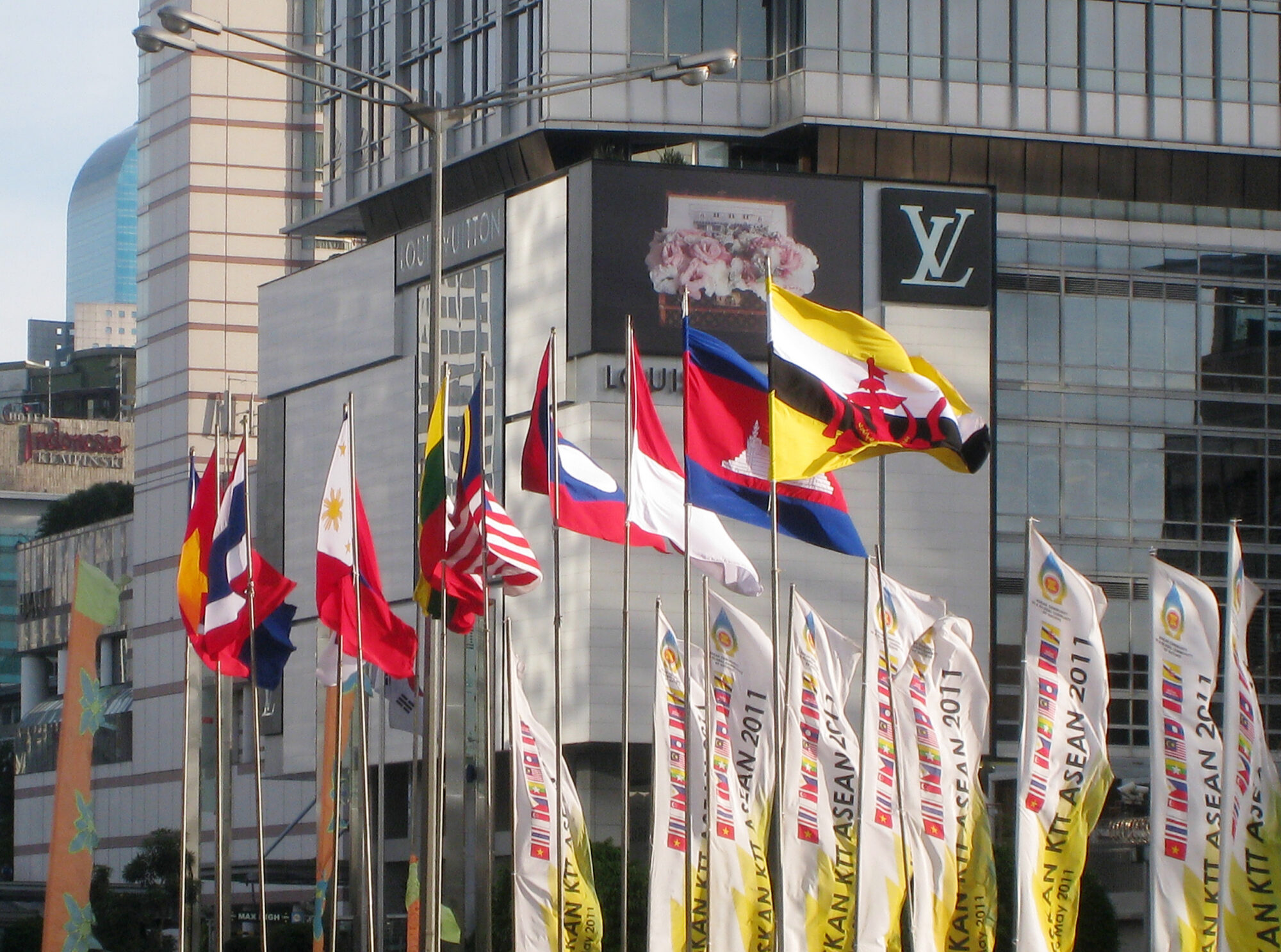
Singapore, Indonesia, Malaysia and the Philippines have agreed to take part in a proposed ASEAN oil stockpiling initiative, Philippine Trade Secretary Cristina Roque said in Manila, with the United Arab Emirates also expressing interest.
The proposal aims to reduce the impact of global supply disruptions on Southeast Asian economies. It would give participating countries access to oil stored within the region rather than leaving them reliant solely on purchases from more distant markets.
ASEAN oil stockpiling: who is taking part
Roque said Singapore, Indonesia, Malaysia and the Philippines had agreed to maintain oil inventories under the proposed arrangement. She said the United Arab Emirates had also expressed interest in participating.
The UAE is not a member of the Association of Southeast Asian Nations (ASEAN). It is an external partner interested in joining the proposed storage arrangement.
The initiative was championed by President Ferdinand Marcos Jr. during the Philippines' 2026 chairmanship of ASEAN. Roque spoke to reporters in an interview following the 28th ASEAN Economic Community Council meeting in Manila.
"This will make it easier also in case a country needs oil rather than buying oil from countries that are far," Roque said.
The arrangement could also reduce transportation and logistics costs, and help governments respond more quickly to supply shortages and disruptions.
Key facts at a glance
| Item | Detail |
|---|---|
| Initiative | Proposed regional oil stockpiling arrangement |
| ASEAN countries that agreed to participate | Singapore, Indonesia, Malaysia, the Philippines |
| External partner interested | United Arab Emirates |
| Championed by | President Ferdinand Marcos Jr. |
| Announced by | Philippine Trade Secretary Cristina Roque |
| Study body | Economic Research Institute for ASEAN and East Asia (ERIA) |
| Operational timeline | Not given |
| Philippine crude oil imports | About 99% of crude oil needs, according to ERIA |
| Philippine imports of mineral fuels and lubricants, 2025 | $16.71 billion, per the Philippine Statistics Authority |
Study and next steps
No details were given on how or when the proposed mechanism would become operational. Roque said the Economic Research Institute for ASEAN and East Asia (ERIA), which conducted a study on the arrangement, would submit its findings and recommendations to Marcos and ASEAN member states.
Asked whether the Philippines could immediately access oil stored in Indonesia, Roque said this was not yet possible. "Not yet. We still have to present the studies of ERIA to the ASEAN member states," she said.
She added that the initiative could begin with willing participants rather than requiring all ASEAN members to join immediately.
Pilot arrangements in Indonesia and Thailand
On Saturday, 14 November, ERIA and the Indonesian Business Council announced letters of intent with energy companies. These aim to explore emergency oil access for the Philippines through existing storage facilities in Indonesia and Thailand.
The proposed pilot arrangements are intended to turn regional energy-security discussions into practical cooperation. The ERIA study examined several approaches to joint stockpiling, including national reserves, shared inventories, and arrangements giving participating countries the right to purchase specified quantities of fuel held in another country's storage facilities.
A separate Nikkei report stated that ASEAN could launch a joint petroleum-products stockpiling scheme as early as 2027, with storage facilities planned in Indonesia and Thailand. Under that model the Philippines could initially buy diesel and gasoline during emergencies through a so-called ticketing arrangement, in which buyers pay for the right to access specified quantities of fuel held by storage operators.
The Philippines has also been exploring whether it could become a regional oil storage hub, allowing other countries to hold petroleum inventories in facilities located there.
Philippine oil imports and regional energy security
The proposal comes as Southeast Asian economies seek to reduce their vulnerability to disruptions in international oil supplies. Instability in the Middle East and risks facing global shipping routes are cited as factors.
Many ASEAN economies depend heavily on imported crude oil and petroleum products. The Philippines imports about 99% of its crude oil, according to ERIA. The Philippine Statistics Authority recorded the value of mineral fuels and lubricants imported by the Philippines in 2025 at $16.71 billion.
The ERIA study and the proposed pilots are expected to help determine how much oil participating countries should store, where inventories should be located, how access would work and how costs would be shared.
ASEAN Power Grid memorandum
Roque said the Philippines also welcomed the signing of a memorandum of understanding on the ASEAN Power Grid. The grid seeks to connect regional electricity networks and improve cross-border energy access.
Together, the initiatives form part of Manila's broader effort to strengthen ASEAN's energy security, improve supply-chain resilience and protect businesses and consumers against future global disruptions.
ASEAN oil stockpiling: what remains undecided
While the four countries have expressed support, the regional mechanism requires further consideration and approval before participating governments can draw on shared reserves. Volumes, storage locations, access rules and cost-sharing have yet to be settled.
Official UAE announcements are published on the UAE Government portal and by the Emirates News Agency.
Related coverage
For background on UAE energy and regulation, see our coverage of UAE Secures IAEA Broader Conclusion for Fourth Consecutive Year.
Read more: our report on Dubai Seizes More Than 19,252 Counterfeit Gas Cylinders in Petroleum Sector Inspections.
On regional connectivity, see Etihad Extends Abu Dhabi–Riyadh and Dammam Cancellations to 19 November as Saudi Flights Stay Disrupted.
On the UAE's wider Asian partnerships, see Japan Reaffirms Defence Cooperation With UAE at Abu Dhabi Reception Marking 72nd JSDF Anniversary.
For another recent economic story, see Abu Dhabi Rent Freeze Caps Annual Increases at 0 Per Cent: What It Means for Tenants, Landlords and Investors.
Frequently Asked Questions
Which countries have agreed to join the oil stockpiling initiative?
Singapore, Indonesia, Malaysia and the Philippines have agreed to maintain oil inventories under the proposed arrangement, Trade Secretary Cristina Roque said. The UAE, which is not an ASEAN member, has expressed interest in participating.
When will the scheme become operational?
No details were given on how or when the mechanism would become operational. ERIA is due to submit its study findings and recommendations to Marcos and ASEAN member states.
Can the Philippines already access oil stored in Indonesia?
No. Roque said this was not yet possible and that the ERIA studies still had to be presented to ASEAN member states.
Filed under
- ASEAN oil stockpiling
- ASEAN Power Grid
- ERIA study
- Oil supply security
- Philippines energy
- Southeast Asia energy
- UAE energy partners
Comments
No comments yet. If you know something about this story that we do not, the newsroom would rather hear it directly — get in touch.