Dubai
Saudi Vision 2030: Goals, Progress, KPIs and the 2026 Mid-Term Reality Check
Saudi Vision 2030 has beaten its targets on women's employment, unemployment and tourism, but foreign investment, non-oil exports and the biggest giga projects are falling behind as the plan enters its final phase.
By Amani Khan
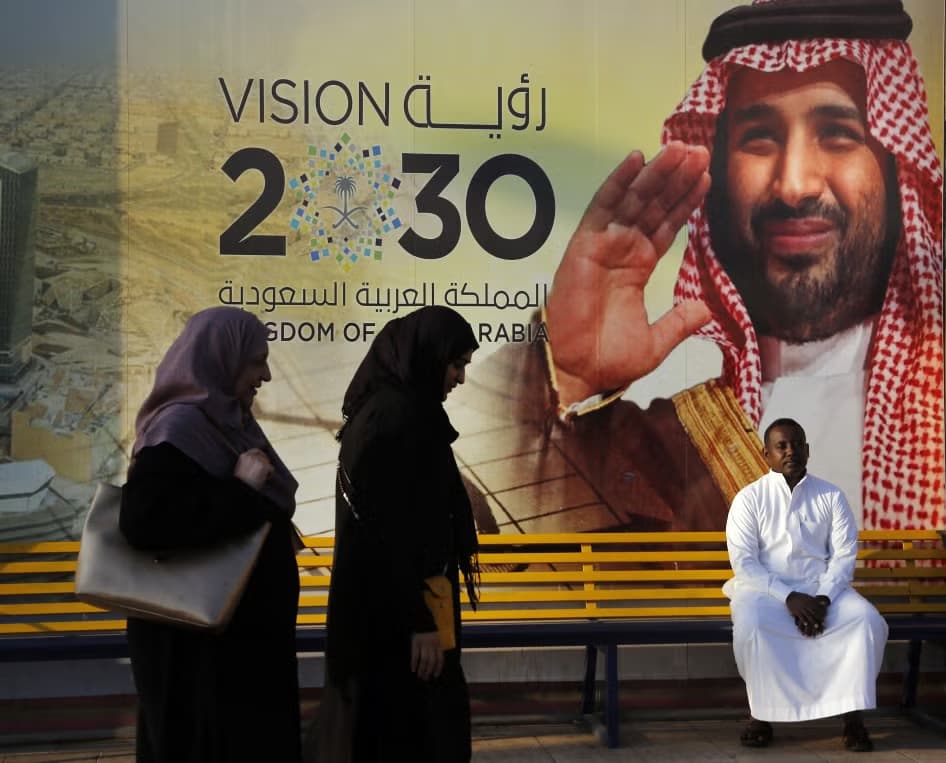
Saudi Vision 2030 is the Kingdom's plan to turn an oil-funded state into a diversified economy, and in 2026 it enters its final five-year phase. The scorecard is split. Social and labor-market targets have been beaten years early, while the capital-heavy ambitions, foreign investment, non-oil exports and the biggest construction schemes, are behind schedule or being trimmed. This guide covers what the plan is, how it is run, where it is winning, where it is not, and what it means for investors, workers and residents.
Key Takeaways
- Female workforce participation, Saudi unemployment, home ownership and visitor numbers have hit or passed their targets.
- Foreign investment, non-oil exports and several megaproject timelines are well behind.
- The fiscal break-even oil price is now above $90 a barrel, higher than when the plan began.
- Phase 3 (2026-2030) means narrower scope and tighter commercial discipline.
Quick Facts About Saudi Vision 2030
- Launched: 25 April 2016
- Led by: Crown Prince Mohammed bin Salman, chair of the Council of Economic and Development Affairs (CEDA)
- Structure: three pillars, 96 strategic objectives, 13 delivery programs
- Capital envelope: roughly $3 trillion across state, sovereign-fund and induced private investment
- Phases: 2016-2020, 2021-2025, 2026-2030
- Monitoring: Adaa, the National Center for Performance Measurement, tracks more than 1,000 KPIs
- Population covered: about 33 million residents, over 60% of them under 35
Why Saudi Arabia Launched the Plan
Oil forced the issue. Between mid-2014 and early 2016, Brent crude fell from about $115 a barrel to below $30. Hydrocarbons supplied roughly 90% of government revenue, reserves were draining by more than $10 billion a month, and the 2015 deficit hit about 15% of GDP. In earlier downturns the state spent, borrowed and waited for a rebound. This time the leadership concluded that waiting was not a strategy.
The machinery came first. In January 2015, CEDA replaced the old Supreme Economic Council under Mohammed bin Salman's chairmanship. Within a year it had drafted the plan with help from McKinsey, Boston Consulting Group and Strategy&, borrowing ideas from Malaysia, South Korea, the UAE and Singapore. Saudi Vision 2030 was approved by the Council of Ministers on 25 April 2016. The National Transformation Program followed in June and broke the plan into 543 initiatives across 24 government bodies.
Also read - UAE Issue Warning about Ai Images of LeadersAI Images of UAE Leaders? New Warning Says Official Approval Is Required
The plan contains 96 Vision 2030 objectives, grouped under three themes.
The Three Vision 2030 Pillars
The Vision 2030 pillars are a framing device; the delivery programs do the real work. They do, however, explain the logic of the plan.
Vibrant Society
This pillar covers culture, sport, quality of life, religious tourism and national identity. The Quality of Life Program is building an entertainment and sport sector from a near-zero base and wants three Saudi cities in the global top 100 for livability. The Housing Program aims to lift home ownership from 47% in 2016 to 70% by 2030. The Pilgrim Experience Program expands Umrah capacity, and the National Character Enrichment Program handles identity and values.
Thriving Economy
This is the engine room: privatization, industry and logistics, fiscal reform, financial-market development, workforce skills and the sovereign investment fund. Most of the hard numbers, and most of the shortfalls, sit here.
Ambitious Nation
This pillar targets government effectiveness: digital services, regulatory reform, performance management, national champions and foreign partnerships. Saudi Arabia now ranks 6th on the UN E-Government Development Index, up from 36th in 2016.
The 13 Vision 2030 Realization Programs
Every objective is delivered through one of the Vision 2030 Realization Programs. Each has a chair, a rolling five-year delivery plan, quarterly reporting to CEDA and independent audit. The thirteen are:
- National Transformation Program
- National Industrial Development and Logistics Program
- Privatization Program
- Fiscal Sustainability Program
- Public Investment Fund Program
- Financial Sector Development Program
- Human Capability Development Program
- Quality of Life Program
- Housing Program
- Pilgrim Experience Program
- National Companies Promotion Program
- National Character Enrichment Program
- Strategic Partnerships Program
A few carry the heaviest numbers. The industrial program wants industrial GDP to grow from about SAR 226 billion in 2016 to SAR 895 billion by 2030. Privatization targets SAR 35-40 billion in cumulative proceeds. Fiscal Sustainability brought in VAT in 2018, excise taxes and expatriate fees. Financial Sector Development pushed Tadawul into the FTSE and MSCI emerging-market indices and opened debt markets to non-resident investors.
Vision 2030 Progress: The KPI Scorecard
Judging Saudi Vision 2030 starts with the official line. The 2024 annual report says 93% of KPIs are at, near or beyond interim targets, with eight already beaten. That is accurate but misleading, because it lumps easy process indicators together with the few structural outcomes that decide whether the economy is truly changing. The Vision 2030 goals are easier to judge when you split wins from misses.
| Indicator | 2016 baseline | 2024 actual | 2030 target | Status |
|---|---|---|---|---|
| Female labor participation | 17% | 33.5% | 30% | Beaten |
| Saudi unemployment | 12.3% | 7.0% | 7% | Beaten |
| Home ownership | 47% | 65.4% | 70% | On track |
| Annual tourist visits | 41m | 115.9m | 150m (revised) | Original target beaten |
| Foreign Umrah pilgrims | 8m | 16.9m | 30m | On track |
| Private sector share of GDP | 40% | 47% | 65% | Behind |
| Non-oil revenue | SAR 163bn | ~SAR 500bn | SAR 1tn+ | Behind |
| Non-oil exports / non-oil GDP | 16% | ~18% | 50% | Well behind |
| FDI (% of GDP) | 1.6% | ~1.8-3.8% (disputed) | 5.7% | Well behind |
| Saudi cities in global top 100 | 0 | 1 (Riyadh) | 3 | Behind |
The FDI number deserves a note. Inflows fell from a 2023 peak of $25.6 billion to $21.3 billion in 2024. On a rolling four-quarter basis they ran near 1.8% of GDP in Q1 2025, against the 5.7% target. The official methodology puts 2024 closer to 3.8%, so the figure is disputed either way.
The scoreboard also has a design flaw. Several of the Vision 2030 objectives already beaten, such as 100 million visitors and 30% female participation, sat inside a realistic delivery range, while the truly structural targets are the ones lagging. Vision 2030 progress on those is the part to watch.
How Saudi Vision 2030 Is Run
The delivery structure resembles a private-sector strategy office attached to a sovereign state, with four tiers:
- CEDA: chaired by the Crown Prince, approves strategy, signs off program plans and reviews quarterly dashboards.
- Strategic Management Office and Vision Realization Offices: the program-management layer that turns strategy into ministry-level delivery plans.
- Adaa: the independent audit layer, which validates data and audits all of the Vision 2030 Realization Programs.
- Delivery entities: line ministries, the sovereign fund and its portfolio companies, and the giga project developers.
The upside is speed and data discipline: KPI status is refreshed quarterly and pushed up to the top. The trade-off, raised by outside observers, is that strategic authority sits with a small group around the Crown Prince, with limited public deliberation.
The Public Investment Fund: Capital Engine of the Plan
The Public Investment Fund (PIF) is the financial core of the plan. Almost every flagship of Saudi Vision 2030 runs through it, from megaprojects to national champions and sports investments.
Its assets grew from about $152 billion in 2015 to over $1 trillion by mid-2025. The fund is on track for roughly $2 trillion by 2030 but probably short of its stretch goal of $2.67 trillion. Aramco funding helped: shares were transferred to the fund, the December 2019 IPO raised $25.6 billion, and a follow-on sale raised $12.35 billion in June 2024. Around 80% of the portfolio is now invested domestically, a deliberate choice to maximize local impact over foreign returns. Its role is to build twelve to thirteen non-oil "champion" sectors.
Reports say the fund's 2026-2030 strategy, approved in April 2026, reshuffled priorities and repositioned some investment objectives.
Vision 2030 Giga Projects: What Is Being Built and What Is Being Cut
The Vision 2030 giga projects were the showpiece of Saudi Vision 2030, and they are where the plan has flexed most.
NEOM, the largest, is the clearest example of a reset. Oxagon, the industrial port, is now described as the critical-path deliverable, while The Line, Trojena and Sindalah are explicitly off it. The fund's governor has reportedly said The Line does not need to be finished by 2030. Elsewhere, the Mukaab cube in central Riyadh was suspended in January 2026, and the wider New Murabba development was pushed from 2030 to 2040 in October 2025. Qiddiya and the Red Sea project have been re-scoped but remain priorities. Tourism funding is shifting from direct subsidy toward commercial co-investment.
Other Vision 2030 projects, such as ROSHN's housing communities and the Diriyah Gate heritage development, continue, and hard external deadlines help. The 2034 FIFA World Cup, awarded in December 2024, forces delivery of stadiums, hotels and transport.
The Saudi Non-Oil Economy: Growth and Gaps
Saudi Vision 2030 will ultimately be judged on whether the Saudi non-oil economy can stand without crude. The numbers are mixed. Non-oil revenue rose from SAR 163 billion in 2015 to over SAR 500 billion in 2024, strong growth but only half the SAR 1 trillion target. Non-oil GDP grew about 4.5% in 2024, with 4-5% projected for 2025. The private sector's share of GDP reached 47%, ahead of its 46% interim target but far from 65%.
The weak spot is exports. Non-oil exports have grown in absolute terms, yet their share of non-oil GDP has stalled near 18%, against a 50% goal. Hydrocarbons still supply an estimated 60-65% of government revenue.
Vision 2030 Tourism, Pilgrimage and Major Events
Vision 2030 tourism is the plan's clearest commercial success. Total visits, domestic and international combined, reached 115.9 million in 2024, passing the original 100 million target and prompting a new goal of 150 million by 2030. Pilgrimage is growing too: 16.92 million foreign Umrah pilgrims in 2024, a record, against a 30 million target.
Two fixed deadlines now anchor the build-out: the 2034 World Cup, and World Expo 2030 in Riyadh, which runs from October 2030 to March 2031 and is forecast to draw 40 million visits. Saudi Vision 2030 treats sport and entertainment as economic sectors rather than side projects, and hard deadlines like these are the best discipline the program has.
Vision 2030 Women and the Labor Market
Few reforms match the change in female labor-force participation, which rose from 17% in 2016 to 33.5% in 2024, above the 30% target. The Vision 2030 women agenda reaches beyond employment: driving, travel and family-registration rules changed, and women now work across retail, finance, government, health and tech.
Saudi unemployment fell from 12.3% to 7.0% in Q4 2024, hitting its 2030 target six years early, helped by the Human Capability Development Program and Saudization quotas. One caveat: male-guardianship structures have not fully disappeared, and critics argue formal reforms run ahead of practice. Saudi Vision 2030 has clearly changed who is working; the quality and pay of those jobs is the next test.
What Saudi Vision 2030 Means for Workers, Investors and Residents
Vision 2030 Jobs for Saudis and Foreign Workers
Vision 2030 jobs are concentrated in tourism, hospitality, construction, logistics, health, sport, mining and digital services. Saudization rules steer many roles toward citizens, so foreign candidates do best in specialist, senior or scarce-skill positions.
Vision 2030 Investment Opportunities
Vision 2030 investment opportunities cluster where the state is spending: hospitality and entertainment, transport and logistics, mining, renewables, health, education and privatized services. Because roughly 80% of the Public Investment Fund's portfolio is deployed domestically, local partnerships and government-linked contracts are the main route in. Vision 2030 projects on the critical path, such as Oxagon and the World Cup and Expo build-out, are safer bets than speculative long-dated schemes.
Vision 2030 Expats: What Changes for Foreign Residents
For Vision 2030 expats the picture is two-sided. Demand for skilled professionals is high, and the regional headquarters requirement for firms seeking government contracts, in force since 2024, is pulling multinational teams into Riyadh. On the other side, expatriate fees, Saudization quotas and rising living costs in fast-growing cities reduce the headline appeal.
Risks, Controversies and Challenges
Saudi Vision 2030 carries a real risk register, and six items remain unresolved.
Fiscal break-even. The Kingdom is funding a roughly $3 trillion program on revenues still 60-65% hydrocarbon-based. Bloomberg Economics put the break-even oil price at about $94 a barrel, and $111 once domestic PIF spending is counted, while Brent has averaged $70-80. The IMF's 2025 Article IV consultation projected a 2025 deficit of 4.3% of GDP, twice the budget target. While crude sits below break-even, each extra giga project dollar is effectively debt-financed.
Foreign investment. The 5.7% target is the most visible miss. The regional headquarters program, the 2024 Investment Law, free zones and licensing reform have not yet produced a breakthrough in cross-border equity inflows.
Execution. NEOM has been openly de-scoped, the Mukaab is suspended and New Murabba is delayed. Every comparable megaprogram in history has missed its dates, but the Vision 2030 giga projects were marketed with unusual certainty, so the retreat stings. Several Vision 2030 projects now straddle the 2030 deadline.
Concentrated governance. Speed and discipline come at the cost of pluralism and resilience, a concern flagged by ratings agencies and the IMF.
Human rights and ESG. The 2018 killing of journalist Jamal Khashoggi, the displacement and prosecution of Howeitat residents during site clearance, and lingering guardianship rules have weighed on some Western institutional capital, including European pension funds and university endowments.
Climate contradiction. The Kingdom targets net zero by 2060 and invests in renewables and hydrogen, while fossil-fuel revenue remains the dominant funding source.
Outlook: 2026 to 2030 and Beyond
Saudi Vision 2030 Phase 3 is officially about "accelerated implementation", which in practice means narrower scope and harder financial gates. The 2025 annual report, published in April 2026, says 225 of 1,290 initiatives are fully implemented, 935 are on track and 130 are flagged for re-scoping or restructuring.
Likely to be delivered: Vision 2030 tourism infrastructure ahead of the World Cup and Expo; entertainment, sport and culture as a real share of non-oil output; continued Vision 2030 women participation gains and higher private-sector Saudi employment; digital payments near G7 levels; PIF assets around $2 trillion; and Umrah capacity above 25 million.
Likely to fall short: NEOM in its original form, especially The Line; FDI at 5.7% of GDP (anything above 4% would surprise); non-oil exports at 50% of non-oil GDP; and the top-100 city target without a methodology reset. The Vision 2030 goals tied to the Saudi non-oil economy are mixed: the headline non-oil share may reach its goal, though a meaningful part will still depend on petrochemicals downstream of Aramco.
Contested: whether the KPI dashboard is the right scoreboard at all, and how many of the remaining Vision 2030 objectives will be delivered, deferred or quietly retired.
After 2030: PIF's governor said in September 2025 that the fund's horizon extends to 2040 and beyond, and New Murabba is now scheduled for 2040. No formal successor has been published, but the working assumption in Riyadh is a follow-on program that narrows and recalibrates rather than resets, leaning on what has worked: labor markets, tourism, sport, pilgrimage and fintech. Saudi Vision 2030 will be remembered as much for what it changed in society as for the projects it dropped.
Frequently Asked Questions
What is Saudi Vision 2030?
It is Saudi Arabia's national transformation plan, launched in April 2016, to reduce dependence on oil, build new sectors such as tourism, industry and technology, and modernize society and government.
What are the Vision 2030 pillars?
A Vibrant Society, a Thriving Economy and an Ambitious Nation.
Is Saudi Vision 2030 succeeding?
Partly. Female participation, unemployment, home ownership and visitor numbers have hit their marks. Foreign investment, non-oil exports and several giga projects are well behind.
Will Saudi Vision 2030 end in 2030?
The formal timeline does, but major projects and events run well beyond it, including the 2034 World Cup and New Murabba's 2040 timeline. A successor framework is widely expected but not yet published.
What does it mean for jobs and expats?
Vision 2030 jobs are growing fastest in tourism, construction, health and digital services, though Saudization prioritizes citizens. Vision 2030 expats find strong demand for specialist skills, offset by fees, quotas and rising costs.
Conclusion
Saudi Vision 2030 has already changed how the Kingdom works, hires and welcomes visitors. Vision 2030 progress on society and labor markets is real and measurable. The Vision 2030 goals that depend on capital, foreign investment, exports and fiscal independence are the ones still open. For readers, investors and job seekers, the practical rule is simple: follow the structural numbers, not the announcements. Vision 2030 investment opportunities will favor projects with fixed deadlines, government backing and commercial discipline. Saudi Vision 2030 will be judged by what survives contact with the budget.
Filed under
Comments
No comments yet. If you know something about this story that we do not, the newsroom would rather hear it directly — get in touch.
Add a comment
Read next
More Dubai
AI Images of UAE Leaders? New Warning Says Official Approval Is Required
UAE Flights Today: Emirates, Etihad, Air Arabia and flydubai Hit by Disruptions as Air Canada Extends Dubai Suspension
Dubai Shared Housing Law Is Live: Dh1m Fines, Inspections and Evictions: What Tenants Need to Know
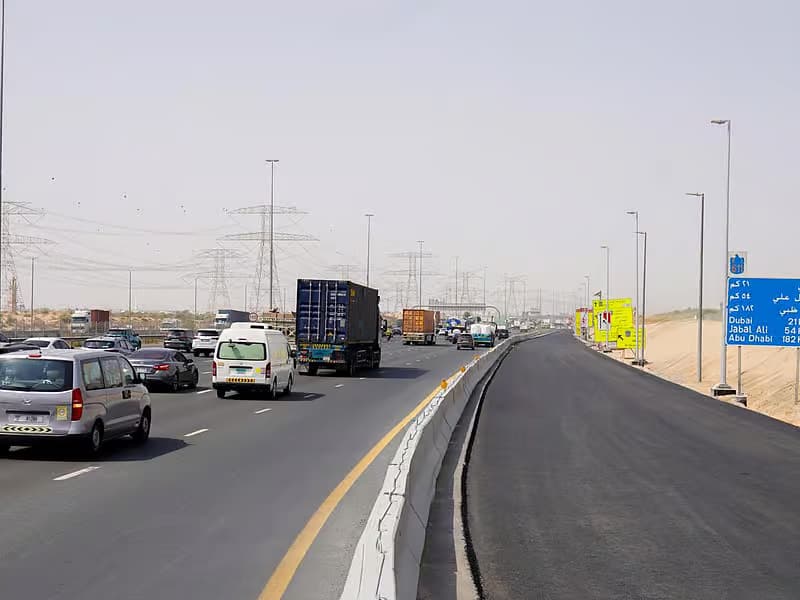
Sharjah-Dubai Commute Set to Get Faster With 2 New Road Lanes
Newsletter
Keep up with Dubai
MKV Digital Gulf Bulletin publishes one briefing a week covering dubai and the rest of the region's business news.