Feature
Jensen Huang Reinstated as Nvidia CEO After Stunning Board U-Turn
Jensen Huang Reinstated as Nvidia CEO
By Amani Khan
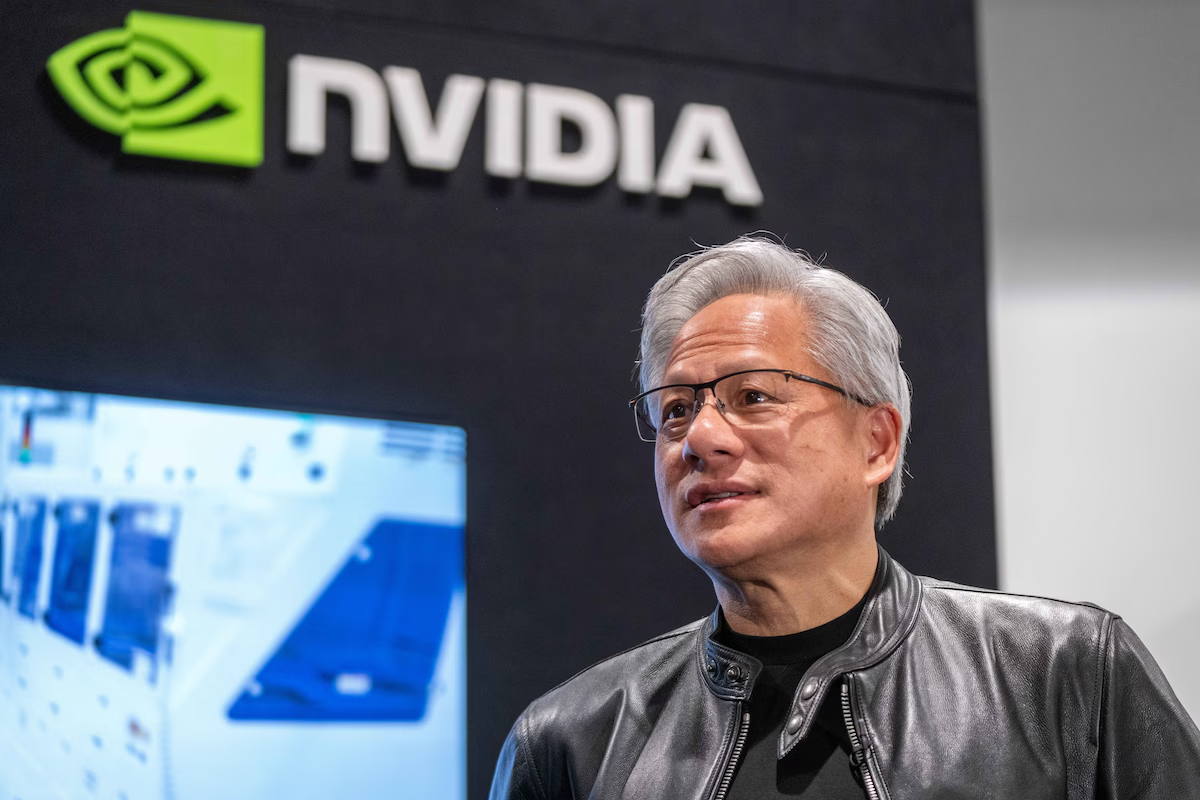
Just days after rejecting his return, Nvidia's board has brought its legendary chief executive back. A dramatic corporate reversal, a controversial personal scandal and mounting national-security questions have put the world's most influential AI chipmaker at the centre of an extraordinary story.
November 23, 2026: In one of the most extraordinary corporate reversals of the year, Jensen Huang is back at the helm of Nvidia.
The artificial intelligence chip giant has reinstated its founder as president and chief executive officer, just days after its board rejected his offer to return following his departure from the company.
The announcement marks a dramatic new chapter in a controversy that has shaken Silicon Valley, attracted the attention of Washington and sent Nvidia shares sharply higher.
According to reporting by The Washington Post, Huang's return follows a turbulent period involving his admission of an extramarital affair with a woman suspected of having links to Chinese intelligence. The controversy also raised questions about Nvidia's business relationships, international chip sales and the potential national-security implications surrounding its operations.
But the biggest surprise may be how quickly the company's position changed.
After initially indicating that it did not intend to reinstate Huang, Nvidia's board reversed course on Monday. US President Donald Trump publicly supported the decision, saying his administration had assured Nvidia that there were no national-security concerns about Huang returning to leadership.
The news immediately sent Nvidia stock soaring.
For a company at the centre of the global artificial intelligence revolution, the Jensen Huang reinstated as Nvidia CEOannouncement is about much more than a leadership change. It raises questions about corporate governance, political influence, investor confidence and the strategic importance of AI technology.
Nvidia brings Jensen Huang back after rejecting his return
The decision to reinstate Huang came after an unusually turbulent sequence of events.
Nvidia's board had previously responded to Huang's expression of willingness to return by saying it did not intend to reinstate him. His subsequent comeback therefore represents a significant reversal in the company's leadership position.
On Monday, the board confirmed that Huang would return as president and chief executive officer.
Board Chairman Harvey C. Jones said the board believed Huang was the right person to lead Nvidia and that his reinstatement was in the best interests of shareholders, employees, partners and customers.
Huang also issued a statement expressing gratitude for the opportunity to return.
He said he was honoured to resume the role and would approach the responsibility with renewed commitment. He thanked the board, interim chief executive Colette Kress, Nvidia's employees, shareholders and industry partners, while also acknowledging the support of his family.
The Jensen Huang reinstated as Nvidia CEO decision brings the company's leadership back to a familiar figure: the executive whose vision and leadership have helped transform Nvidia from a graphics processor manufacturer into one of the most important companies in the artificial intelligence industry.
Donald Trump publicly backs Jensen Huang's return
The White House's involvement has added another dimension to the Nvidia leadership drama.
Trump confirmed that he had spoken with Huang on Sunday about the possibility of his return. According to the president, Huang assured him that he would work harder than before.
Speaking to CNBC, Trump said his administration had assured Nvidia that there were no national-security concerns about Huang's reinstatement.
Trump also made clear that he supported the board's decision.
"The board decided to do what we wanted them to do," the president said.
In a separate social media statement, Trump described the reinstatement as the correct decision and argued that Nvidia needed Huang's leadership for the benefit of the company and the American economy.
The timing was particularly notable. Trump appeared to have advance knowledge of the decision, telling PBS NewsHour shortly before Nvidia's announcement that Huang was back where he should be.
His comments underline how closely Nvidia's leadership has become connected to the wider US debate about artificial intelligence, semiconductor manufacturing and technological competition with China.
The Jensen Huang reinstated as Nvidia CEO development is therefore not simply an internal corporate matter. It has unfolded against the backdrop of US technology policy and national-security priorities.
Nvidia shares jump 33% after the announcement
Investors reacted immediately to the news.
Nvidia shares surged approximately 33 per cent to $165.57 at Monday's opening bell following confirmation of Huang's return.
The sharp rise reflected the importance investors attach to Huang's leadership and his relationship with the company's long-term strategy.
However, the recovery still left the stock below its reported all-time high of $239.24, reached the previous month.
The dramatic market reaction highlights the extent to which Nvidia's identity and future prospects are associated with its founder.
Huang has become one of the most recognisable figures in the global AI industry. His leadership has been closely associated with Nvidia's position as a leading supplier of the advanced chips used to train and operate artificial intelligence systems.
For investors, the Jensen Huang reinstated as Nvidia CEO announcement may ease immediate uncertainty surrounding the company's leadership. It does not, however, automatically resolve the regulatory, political and governance questions that contributed to the controversy.
What is the controversy surrounding Jensen Huang?
Huang's departure followed revelations about extramarital affairs, including an alleged relationship with a woman identified in reporting as Alice Huang, who is suspected of having connections to Chinese intelligence.
These allegations have attracted particular attention because of Nvidia's strategic position in the semiconductor industry and its business interests involving China.
It is important to distinguish between allegations and established findings.
The US Justice Department has not announced a conclusion that Alice Huang was acting as a Chinese intelligence operative. Attorney General Todd Blanche said the department was investigating or examining the matter.
The Justice Department is also conducting a criminal investigation involving potential export-control violations concerning Megaspeed, a Singapore-based cloud computing company where Alice Huang was an executive.
The investigation and the wider controversy have raised questions about whether sensitive technology, commercial relationships and potential intelligence concerns intersected in ways that could affect national security.
Nvidia's leadership crisis has consequently become part of a much larger discussion about the protection of advanced semiconductor technology.
Nvidia's China business brings further scrutiny
The controversy involving Huang has also intensified attention on Nvidia's sales and export-control compliance.
Advanced AI chips are strategically important because they provide the computing power required to develop increasingly sophisticated artificial intelligence systems.
The United States has imposed restrictions on certain semiconductor exports to China, citing national-security concerns and the potential military applications of advanced computing technology.
Nvidia's business interests in China have therefore attracted scrutiny from lawmakers and government officials.
Elected representatives have called for investigations into Huang's conduct, the company's chip sales and the enforcement of US export controls.
The concerns extend beyond the company's leadership. They involve how advanced American technology is sold, who can access it and whether existing restrictions are sufficient to prevent sensitive chips from reaching prohibited users.
Nvidia's board has also announced the creation of a new committee focused on national security and export controls.
This development suggests that the company will face continued pressure to demonstrate that its commercial strategy is compatible with the regulatory responsibilities associated with supplying critical AI infrastructure.
Colette Kress returns to her role as CFO
During Huang's absence, Nvidia's chief financial officer, Colette Kress, stepped in as interim chief executive.
Following Huang's reinstatement, she is expected to return to her previous position as CFO.
Kress played an important role during the company's brief period of leadership uncertainty, and Huang publicly thanked her for her leadership.
Her return to the finance position restores Nvidia's established executive structure, although the company will still have to address the wider questions raised during the crisis.
For a business operating at the centre of the global AI industry, maintaining confidence among employees, customers, shareholders and government partners will be essential.
Is this another Sam Altman-style comeback?
Nvidia's leadership reversal has drawn comparisons with the extraordinary events at OpenAI in 2023.
Sam Altman was removed as OpenAI chief executive following a sudden boardroom crisis. After employees and influential supporters rallied behind him, he returned to the position just days later.
The comparison is not exact, but both situations demonstrate how quickly leadership decisions can change when a company's founder has enormous influence over its identity, workforce and strategic direction.
In Nvidia's case, Huang's return comes amid a different set of circumstances, including national-security questions and investigations that remain unresolved.
The Jensen Huang reinstated as Nvidia CEO story also highlights the influence that prominent founders can retain even after stepping away from executive leadership.
For companies whose fortunes are closely associated with one individual, replacing that person can create uncertainty extending far beyond the boardroom.
What happens next for Nvidia?
Huang's return may restore a familiar leadership structure, but it does not bring the controversy to an end.
Several issues remain important:
- National-security scrutiny: Investigations and questions surrounding the company's China-related business activities remain significant.
- Export-control compliance: Nvidia faces continued attention over how its advanced chips are sold and distributed internationally.
- Corporate governance: The board will need to maintain confidence in its oversight and decision-making.
- Investor confidence: The market's immediate reaction was positive, but longer-term confidence will depend on the company's performance and ability to manage regulatory risks.
- AI leadership: Nvidia must continue competing in an industry where demand for advanced computing infrastructure remains strategically important.
The Jensen Huang reinstated as Nvidia CEO decision has settled one immediate question: who will lead the company.
The larger questions about accountability, technology exports and the relationship between corporate power and national security remain open.
For the global AI industry, the events surrounding Nvidia are a reminder that the future of artificial intelligence is being shaped not only by technological breakthroughs, but also by politics, regulation and the people controlling the infrastructure behind them.
And for Nvidia, the return of its founder may be the beginning of a new chapter rather than the end of its most turbulent period.
MKV Digital Gulf Bulletin will continue following developments in artificial intelligence, global technology leadership and the business decisions shaping the future of the digital economy.
Jensen Huang's Nvidia return: Key developments at a glance
| Development | What happened |
|---|---|
| Leadership change | Nvidia reinstated Jensen Huang as president and CEO |
| Previous board position | The board had previously indicated it did not intend to reinstate him |
| Board chairman | Harvey C. Jones supported the return |
| Trump's position | Publicly backed Huang's reinstatement |
| Stock market reaction | Nvidia shares surged approximately 33% at Monday's opening |
| Interim leadership | Colette Kress had served as interim CEO |
| CFO position | Kress is returning to her CFO role |
| Main controversy | Allegations involving an affair with a woman suspected of Chinese intelligence links |
| Government scrutiny | Investigations and questions involving national security and export controls |
| New board oversight | Nvidia announced a committee focused on national security and export controls |
FAQs: Jensen Huang reinstated as Nvidia CEO
1. Has Jensen Huang returned as Nvidia CEO?
Yes. Nvidia reinstated Jensen Huang as its president and chief executive officer on November 23, 2026, following a board decision reversing its earlier position.
2. Why did Jensen Huang leave Nvidia?
Huang's departure followed revelations about extramarital affairs, including an alleged relationship with a woman suspected of having links to Chinese intelligence. The controversy also raised questions about Nvidia's business relationships and national-security implications.
3. Why did Nvidia reinstate Jensen Huang?
The board said it believed Huang was the right person to lead Nvidia and that his return was in the best interests of shareholders, employees, partners and customers. Trump also publicly supported the decision.
4. Did Donald Trump support Jensen Huang's return?
Yes. Trump confirmed speaking with Huang and publicly backed his reinstatement. He also said his administration had assured Nvidia that there were no national-security concerns about Huang returning.
5. How much did Nvidia shares rise after Huang returned?
Nvidia shares surged approximately 33 per cent to $165.57 at Monday's opening bell following the reinstatement announcement.
6. Who was Nvidia's interim CEO?
Nvidia CFO Colette Kress served as interim chief executive during Huang's absence. Following his return, she is expected to resume her CFO position.
7. Is Jensen Huang accused of spying for China?
The reporting concerns an alleged relationship with a woman suspected of having links to Chinese intelligence. This does not establish that Huang himself engaged in espionage. The Justice Department has not announced a conclusion that the woman was acting as a Chinese intelligence operative.
8. Is Nvidia under investigation?
The company and its business activities have attracted scrutiny over export controls and national-security issues. The Justice Department is also investigating potential export-control violations involving Megaspeed, a Singapore-based cloud computing company where Alice Huang was an executive.
9. What does Jensen Huang's return mean for the AI industry?
Huang's return restores Nvidia's founder to its leadership at a critical time for artificial intelligence. The decision may reduce immediate leadership uncertainty, but regulatory scrutiny, international chip sales and national-security questions remain important challenges.
10. Who founded Nvidia?
Nvidia was founded in 1993 by Jensen Huang, Chris Malachowsky and Curtis Priem. Huang has served as the company's defining leader throughout its transformation into a major supplier of AI computing technology.
Comments
No comments yet. If you know something about this story that we do not, the newsroom would rather hear it directly — get in touch.