Politics
Middle East War: Eight Developments UAE Residents Should Note as Flight Disruption Continues
Middle East War updates for UAE residents on November 4: Trump’s Iran strike warning, Hormuz tanker claims, Saudi drone interceptions and UAE flight changes.
By Amani Khan
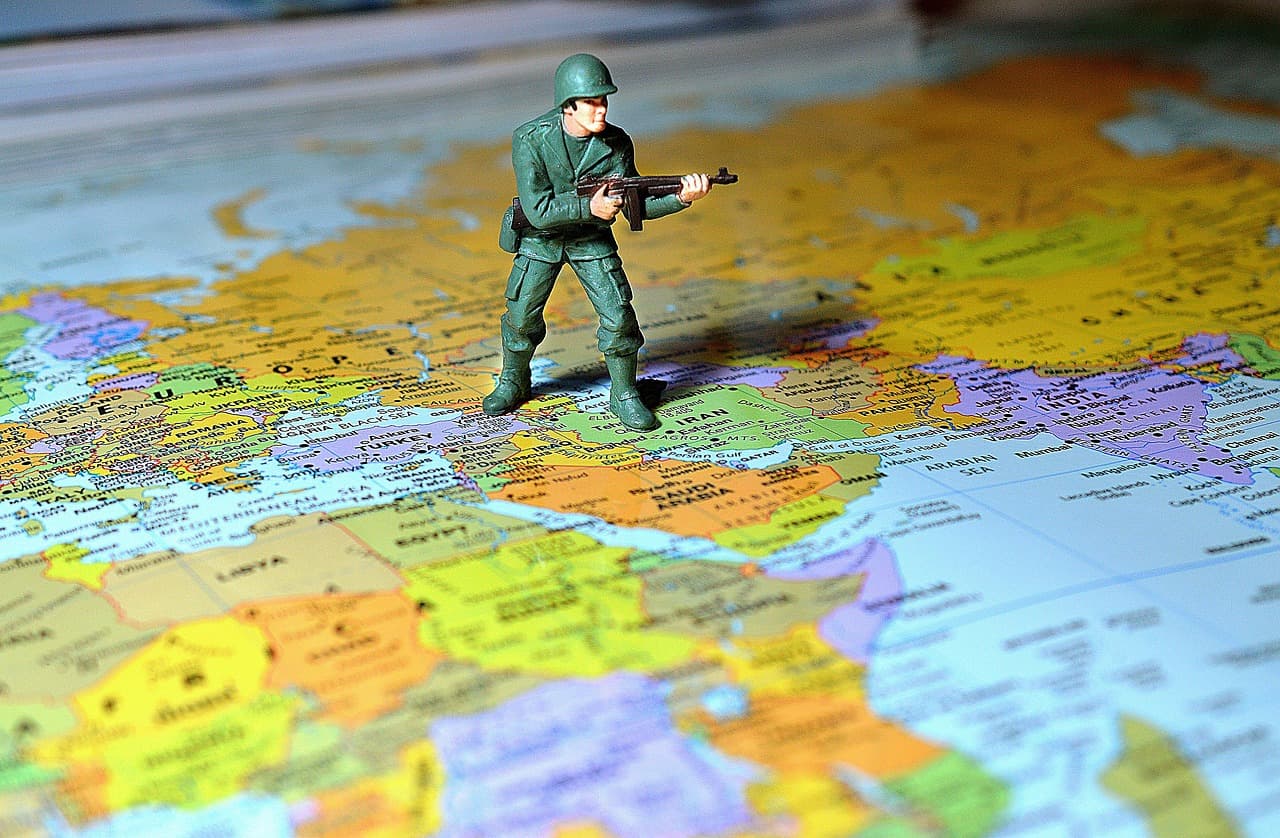
The Middle East War entered another tense phase on Wednesday, November 4, as US President Donald Trump warned Iran of a possible major strike, Tehran reported new tanker incidents near the Strait of Hormuz, and Saudi Arabia said it had intercepted three drones targeting its territory.
The latest developments come after US forces carried out limited strikes on Iran’s Qeshm Island, raising fresh concerns over maritime security and the possibility of renewed military escalation. Iran’s Islamic Revolutionary Guards Corps (IRGC) claimed that four oil tankers caught fire after hitting naval mines near the strategic waterway. However, the tanker claims have not been independently verified.
For UAE residents, the Middle East War has implications beyond the battlefield. Regional flight schedules, shipping routes, energy markets and travel plans remain sensitive to developments involving Washington, Tehran and neighbouring Gulf states.
Here are eight major developments to know on Wednesday evening, November 4.
1. Trump warns Iran of a possible ‘heavy hit’ as Washington weighs further strikes
US President Donald Trump has warned that Washington may need to take major military action against Iran, saying a possible operation could involve a “heavy hit”.
Speaking to Fox News, Trump reiterated that Iran would not be allowed to obtain nuclear weapons and suggested the United States could take further action if the confrontation continued.
The warning follows US strikes on Qeshm Island, near the Strait of Hormuz. US officials described the earlier operation as limited and defensive, targeting Iranian air-defence systems that they said posed a threat to American assets.
The Wall Street Journal reportedly said plans for further strikes were prepared, although no decision to launch a new large-scale operation has been confirmed.
Diplomatic efforts between Washington and Tehran remain ongoing, but negotiations have not produced a breakthrough.
The latest warning has added to uncertainty surrounding the Middle East War, particularly as military activity near the Strait of Hormuz could affect regional security and international shipping.
2. Iran claims four oil tankers caught fire near the Strait of Hormuz
Iran’s Islamic Revolutionary Guards Corps said four oil tankers struck naval mines and caught fire while attempting to pass through a restricted route south of the Strait of Hormuz.
According to the IRGC, the vessels ignored restrictions imposed on the passage and remained ablaze. The group also said two other vessels had been stopped and claimed its air-defence forces shot down a drone over the strait.
The claims have not been independently verified. The IRGC has not publicly provided sufficient details to establish the identities of all four tankers, the full extent of the reported damage or the circumstances surrounding the incidents.
The Strait of Hormuz is a critical international shipping corridor through which significant volumes of oil and other energy supplies move. Any disruption could have consequences for shipping costs, energy prices and regional trade.
The reported tanker fires are therefore a significant development in the Middle East War, although the distinction between Iranian claims and independently confirmed maritime incidents remains important.
3. Iran warns of a wider conflict following US midterm election results
Iran’s Supreme Leader Mojtaba Khamenei has warned that renewed US attacks could widen the conflict, dismissing expectations that the Democrats’ victory in the US midterm elections would lead to a change in Washington’s approach.
In a written statement, Khamenei said those expecting a shift in US policy following the elections were “seriously mistaken”.
Iranian parliament speaker and chief negotiator Mohammad Bagher Ghalibaf also commented on the results, saying Americans had voted “NO TO WAR”. His remarks reflected Tehran’s interpretation of the election outcome.
Trump acknowledged that the conflict with Iran had contributed to his party’s election defeat, pointing to higher petrol prices and their impact on voters.
Thousands of demonstrators also gathered outside the former US embassy in Tehran for an annual anti-American rally.
The election results have added a political dimension to the Middle East War, but they do not establish that US military policy will change. The direction of the conflict will depend on decisions by Washington, Tehran and other regional actors.
4. Saudi Arabia intercepts three drones as Jazan alert is lifted
The Saudi-led coalition said it intercepted and destroyed three drones targeting Saudi territory on Wednesday.
Coalition spokesman Major General Turki Al-Malki said one drone was intercepted over the Mecca region, another over the Eastern Province and a third while heading towards southern Saudi Arabia.
The coalition did not identify who launched the drones.
Separately, Yemen’s Houthi movement claimed drone and ballistic missile attacks against an airport and an airbase in southwestern Saudi Arabia. These claims have not been independently confirmed.
Saudi Civil Defence also announced that the danger had passed in Jazan Province after an earlier alert was issued through the National Early Warning Platform. The warning was subsequently lifted.
The developments highlight the continued security concerns surrounding Saudi Arabia amid the Middle East War. UAE residents travelling to Saudi Arabia should follow official advisories and confirm their flight status with their airlines.
For background, readers can also explore our report on Houthi attacks on Saudi Arabia and the wider Yemen conflict.
5. Drone attacks reported against Iranian Kurdish opposition groups in Iraq
Two explosive-laden drones reportedly attacked Iranian Kurdish opposition groups in northern Iraq on Wednesday, Reuters reported, citing security sources.
The reported incidents took place in Sulaymaniyah and east of Erbil, within Iraq’s autonomous Kurdistan region.
Iran has previously targeted bases belonging to Iranian Kurdish opposition groups in the region, accusing them of conducting operations against Iranian territory.
As of Wednesday, the identities of those responsible for the latest attacks had not been immediately confirmed. Details about casualties or damage were also not immediately available.
The incidents add another security dimension to the Middle East War, with developments involving Iran extending beyond its immediate borders into neighbouring Iraq.
6. Indian national dies after October attack on Riyadh airport
An Indian national who was critically injured during an attack on Riyadh airport on October 10 has died in intensive care, the Indian Embassy in Saudi Arabia confirmed on Wednesday.
The embassy said it had supported the victim’s family during his hospitalisation and would continue to provide assistance.
It also offered condolences and said it would help arrange the repatriation of the victim’s remains to India or a funeral in Riyadh, depending on the family’s wishes.
The death was announced on November 4, but the airport attack itself occurred last month. It should therefore be understood as a development concerning an earlier incident, rather than a new attack on Riyadh airport.
For UAE residents with travel plans involving Saudi Arabia, the wider regional security situation remains relevant. Our earlier UAE residents’ regional update covering Riyadh airport and Iran tensions provides additional context on recent developments.
7. Israeli strike kills one person in southern Lebanon, ministry says
Lebanon’s Health Ministry said an Israeli strike in southern Lebanon killed one person on Wednesday.
The ministry announced the death amid continuing reports of military activity in the region.
Further information about the exact location of the strike, the identity of the victim and the circumstances surrounding the incident was not immediately available.
The latest reported death comes as tensions continue across multiple fronts in the Middle East War. Developments in Lebanon remain closely watched because of the risk that localised military activity could contribute to a broader regional escalation.
The available information does not establish whether Wednesday’s strike was directly connected to the latest US-Iran developments.
8. UAE flights: Etihad extends Saudi cancellations as other airlines resume services
UAE aviation operations remain mixed, with some airlines continuing to adjust schedules while others resume selected services.
Etihad Airways has extended cancellations on selected Abu Dhabi flights to Riyadh and Dammam through November 19, according to the supplied report.
Selected Jeddah services, including flights EY601, EY602, EY603 and EY604, are scheduled to resume on November 6.
British Airways resumed London-Dubai flights on November 3. Lufthansa, SWISS and Eurowings are scheduled to return on November 25.
Iranian airline services to the UAE and Emirates-flydubai codeshare flights to Tel Aviv remain suspended, while selected flights at Dubai and Abu Dhabi airports are experiencing delays and cancellations. Not all disruptions are necessarily connected to the conflict.
For UAE residents, the most important step is to check directly with the airline before travelling. Flight schedules can change at short notice, and passengers should rely on their carrier’s latest operational notices rather than older reports.
For additional aviation context, read our coverage of UAE flight disruptions affecting Emirates, Etihad, Air Arabia and flydubai.
The Middle East War continues to influence airline planning across the region, particularly on routes involving Saudi Arabia, Iran and other destinations affected by airspace restrictions.
What UAE residents should watch as the Middle East War continues
The latest developments show how the Middle East War is affecting several areas simultaneously, from military activity and maritime security to airline operations and regional travel.
For UAE residents, the immediate priorities are:
- Flights: Check airline notifications before travelling, particularly on Saudi routes.
- Regional security: Follow official UAE and Saudi announcements rather than unverified social media claims.
- Shipping: Watch developments around the Strait of Hormuz, where reported incidents remain a concern.
- Diplomacy: Monitor whether US-Iran negotiations resume or produce any new agreement.
- Military escalation: Distinguish confirmed operations from claims made by parties involved in the conflict.
Readers can also revisit our October 17 Middle East War update for UAE residents for earlier regional developments, and our report on US embassy staff ordered to leave Saudi Arabia amid security concerns for background on the security situation affecting the Kingdom.
The Middle East War remains fluid, and the situation could change as new statements, military developments and airline advisories emerge.
Frequently asked questions
What are the latest Middle East War developments on November 4, 2026?
The key developments include Trump’s warning of a possible major strike on Iran, Iranian claims of tanker fires near the Strait of Hormuz, Saudi Arabia’s interception of three drones, reported drone attacks in Iraq, an Israeli strike in southern Lebanon and continuing UAE flight changes.
Did Iran confirm that four oil tankers caught fire?
Iran’s IRGC claimed that four tankers caught fire after striking naval mines near the Strait of Hormuz. The claim has not been independently verified, and details about the vessels and damage remain unclear.
Has Trump confirmed a new major strike on Iran?
No new major strike has been confirmed. Trump warned that the United States could take significant military action, while reports said further strike plans were being considered.
Are UAE flights affected by the Middle East War?
Some UAE flight schedules remain affected by regional security conditions. Etihad has extended selected Riyadh and Dammam cancellations through November 19, while selected Jeddah services are scheduled to resume on November 6. Passengers should check directly with their airline.
Is the Middle East War affecting Saudi Arabia?
Saudi Arabia reported intercepting three drones on November 4. The coalition did not identify who launched them. The Houthis separately claimed attacks against Saudi targets, but those claims have not been independently confirmed.
What should UAE residents do during the Middle East War?
Residents should follow official government advisories, check airline updates before travelling, and avoid sharing unverified claims about attacks, casualties or flight disruptions.
The Middle East War continues to shape the regional security outlook, with the Strait of Hormuz, Saudi airspace and airline operations among the developments UAE residents should monitor closely.
Filed under
- Gulf security
- Iran-US conflict
- Middle East War
- November 4 2026
- Saudi Arabia drone interceptions
- Strait of Hormuz
- Trump Iran warning
- UAE flight updates
Comments
No comments yet. If you know something about this story that we do not, the newsroom would rather hear it directly — get in touch.
Add a comment
Read next
More Politics
US Embassy Staff in Saudi Arabia Ordered to Leave as Houthi Attacks Hit Airports and Oil Sites
Middle East War Update: Seven Key Developments for UAE Residents on October 17, 2026
Mecca Drone Report Raises Fears of a Wider Saudi-Houthi Escalation

Shock Cancellation: Japan Festival in Saudi Arabia Called Off Over Safety Concerns
Newsletter
Keep up with Politics
MKV Digital Gulf Bulletin publishes one briefing a week covering politics and the rest of the region's business news.