Dubai
Bioluminescence Turns Al Aqah and Khorfakkan Beaches Electric Blue on UAE East Coast
UAE bioluminescence linked to the marine organism Noctiluca scintillans has lit up Al Aqah Beach in Fujairah and Khorfakkan Beach, drawing residents and photographers to the shore after dark.
By Amani Khan
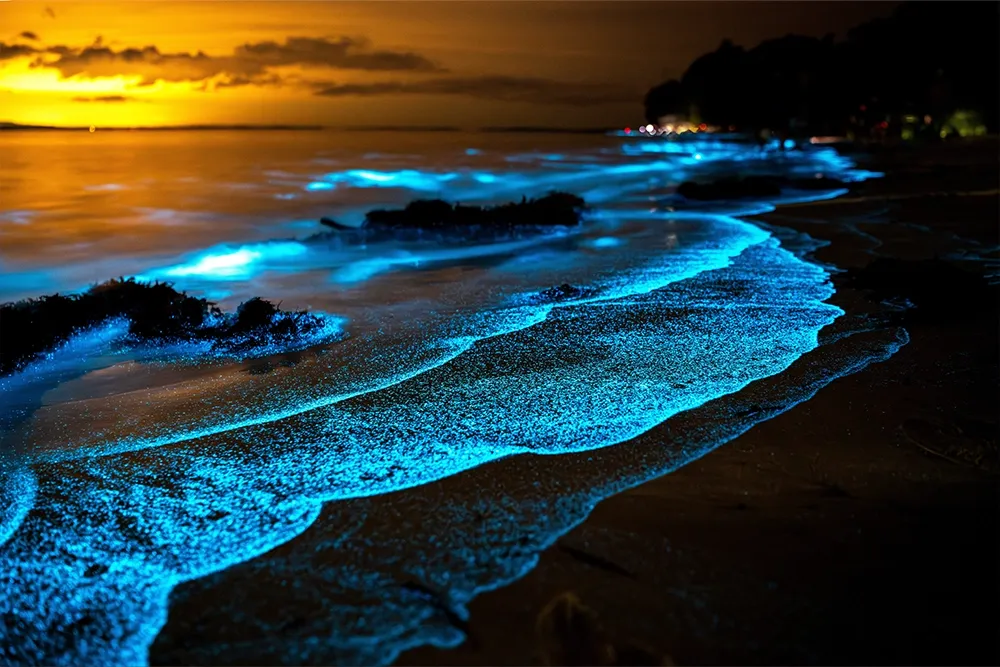
Bioluminescence has turned stretches of the UAE's eastern coastline electric blue, with the glowing display spotted at Al Aqah Beach in Fujairah and similar sightings reported along Khorfakkan Beach. Some experts have described the latest sightings as among the most spectacular displays of bioluminescence recorded in the UAE.
The display has drawn attention from residents and photographers seeking to witness the natural phenomenon, which illuminates both the waters and the sands of the affected beaches.
For other news from across the country, see our report: Global Village Offers Free Entry to First 4,000 Omani Nationals for Oman National Day.
UAE bioluminescence sightings at Al Aqah and Khorfakkan
Videos circulating on social media show waves shimmering with an electric-blue glow as they wash ashore, while movement through the shallow water creates luminous trails.
The spectacle has also prompted residents to visit Al Aqah Beach and Khorfakkan Beach after dark to catch a glimpse of the glowing waters along the eastern coastline.
Read more: Dubai Declares 3-Day Eid Al Etihad Holiday for Private Schools and Universities.
Noctiluca scintillans, known as sea sparkle
The phenomenon is associated with Noctiluca scintillans, a microscopic marine organism commonly known as “sea sparkle”, which can produce flashes of blue light when disturbed by movement in the water.
The Sharjah Marine Science Research Centre at the University of Khorfakkan has captured microscopic images of the organism, revealing its distinctive round, semi-transparent cells.
Key facts about the sightings
| Detail | Information |
|---|---|
| Locations | Al Aqah Beach, Fujairah; Khorfakkan Beach |
| Organism | Noctiluca scintillans, commonly known as “sea sparkle” |
| Appearance under the microscope | Round, semi-transparent cells |
| Microscopic images captured by | Sharjah Marine Science Research Centre, University of Khorfakkan |
| What triggers the glow | Movement in the water, such as breaking waves |
| Predictability | Unpredictable; appearance can vary from night to night |
For other UAE coverage, see our report: Dubai Municipality Wins Federal Approval for Youth Space to Support Young Employees.
How bioluminescence works
Bioluminescence occurs when certain living organisms produce light through chemical reactions within their cells. In marine environments, the glow can become particularly visible when waves break or water is disturbed, creating the impression that the sea is illuminated from within.
This explains why the UAE bioluminescence has been particularly visible in waves washing ashore and in shallow water disturbed by movement, where luminous trails form.
Unpredictable conditions for the glowing waters
The phenomenon is unpredictable and depends on environmental conditions, including the presence of marine microorganisms. Its appearance can vary from night to night, so each sighting differs for beachgoers and photographers.
The latest sightings show how the phenomenon can turn an ordinary stretch of coastline into a night-time display.
For other news from Abu Dhabi, see our report: BYD Demonstrates Robotic Flash Charging in Abu Dhabi, Claiming 10% to 70% in Five Minutes. Read more on life in the UAE: Filipino Residents Turn to Ukay-Ukay Thrift Shopping in the UAE as Living Costs Rise.
Frequently Asked Questions
Where has bioluminescence been seen in the UAE?
The glow has been spotted at Al Aqah Beach in Fujairah, with similar sightings reported along Khorfakkan Beach.
What causes the blue glow?
The phenomenon is associated with Noctiluca scintillans, a microscopic marine organism commonly known as “sea sparkle”, which can produce flashes of blue light when disturbed by movement in the water.
Can visitors predict when the glow will appear?
No. The phenomenon is unpredictable, depends on environmental conditions including the presence of marine microorganisms, and its appearance can vary from night to night.