Opinion
Evil Eye: How a 5,000-Year-Old Belief Still Shapes Gulf Life
The Al Ayn Evil Eye, a belief in the harm an envious gaze can cause, stretches back 5,000 years and now thrives from wedding halls to social media feeds.
By Amani Khan
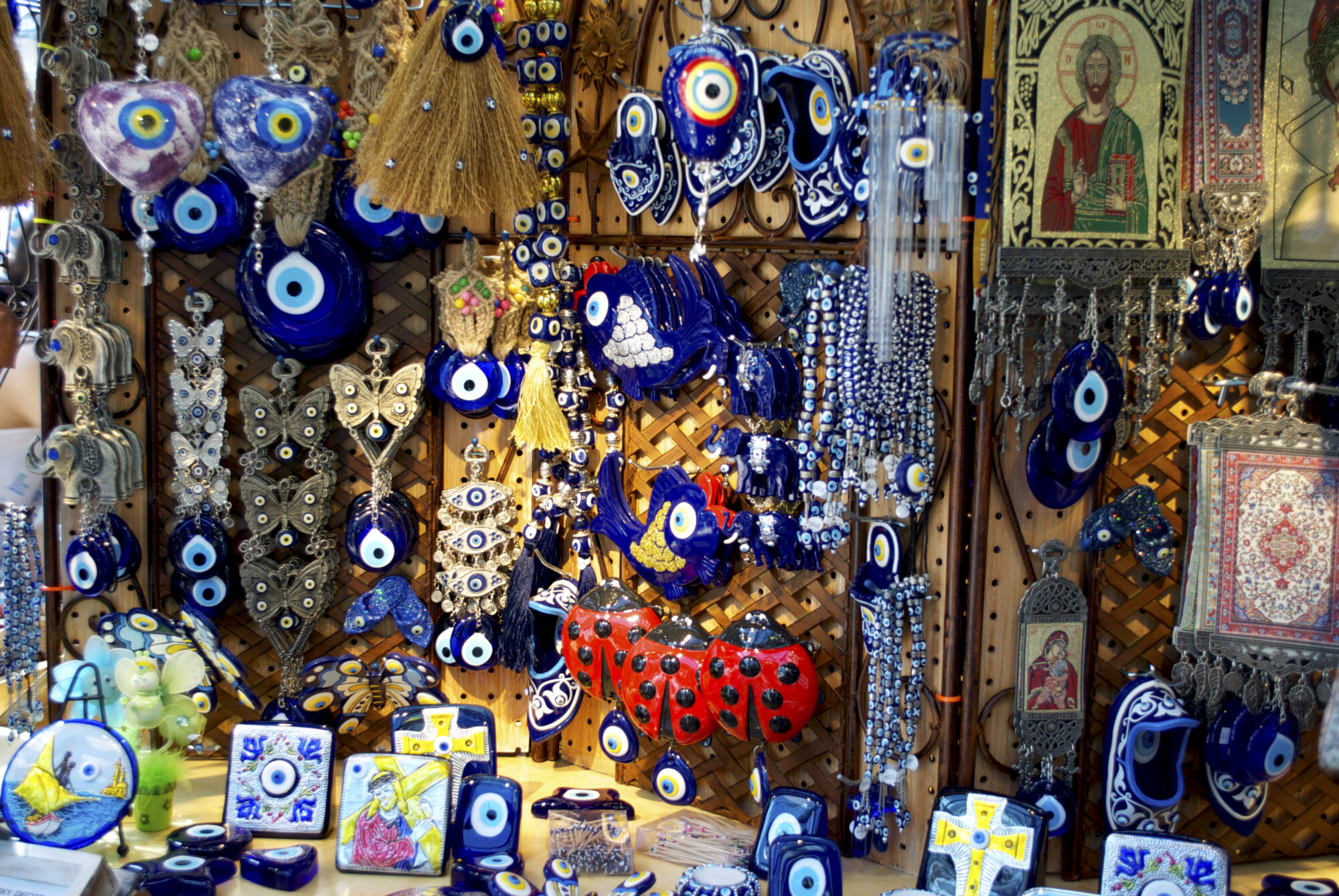
Wear it on a keychain, hang it above a door or stitch it into a child's collar: the Evil Eye follows you everywhere in the Middle East. Yet this ancient symbol raises a modern puzzle. How does a charm meant to avert attention become one of the most eye-catching accessories around?
Al Ayn, the Arabic name for the Evil Eye, rests on a simple idea. An envious gaze can bring illness, misfortune or harm to another person, corrupt an achievement or sour good fortune. People have spent millennia inventing ways to stop it.
What is Al Ayn, the Evil Eye?
Al Ayn is a cultural artefact rooted in ancient beliefs and social rituals. The remedies range from protective symbols to communal customs. Kuwaiti-Indian multimedia artist Zahed Sultan has made the subject a fascination, drawn by both its complex history and its many aesthetics.
Sultan argues that Al Ayn keeps evolving because it speaks to a basic part of human nature. "When faced with sudden misfortune, people naturally ask why it happened to them," he says. "Whether through ancient amulets, or modern wellness concepts like avoiding negative energy, the practices that have grown up around Al Ayn offer accessible, comforting methods to maintain a sense of protection and control over the unknown."
He also sees a deeper cultural value in it. "I'm drawn to Al Ayn because it represents a cultural memory where everyday traditions become carriers of stories and create tension between preservation and erasure," he says.
How old is the Evil Eye belief?
The concept dates back 5,000 years, although nobody can pin down its precise origins. The Evil Eye and similar talismanic symbols run through ancient Mesopotamia, Egypt, the Levant and Greece. They also appear in the Ottoman Empire and in the Indian and Urdu traditions of South Asia.
Al Ayn has put down especially firm roots in Islamic culture, despite its pagan origins. Sultan says Islamic tradition explicitly acknowledges its reality. "Prophetic traditions state that the Evil Eye is real and can exert a tangible influence," he explains.
Why do people say 'Mashallah'?
Sultan links the everyday phrase to this belief. "This is why expressions like 'Mashallah' are so common in the Arab world, invoking God's name shifts the focus of praise to the divine, neutralising potential envy or evil eye curses," he says.
He adds that religion still permeates culture and society in Islam and Eastern traditions. Phrases such as 'Inshallah' and 'Mashallah' form part of the fabric of daily life. For Sultan, that reflects a worldview in which spiritual forces influence the physical world.
Protective symbols: from blue glass to Sadu weaving
Al Ayn takes many guises, and not all of them show an eye. Some designs confront the gaze directly. Others scatter it.
| Form of protection | Link or setting | How it works |
|---|---|---|
| Blue glass Evil Eye ('Göz Boncuğu' or 'Eye Bead') | Most associated with the Ottomans | Acts as a mirror, gazing back at the observer to deflect envy |
| Khamsa | Common in the Levant | Combines the Evil Eye with an open palm and primarily protects women from ill will |
| Traditional garments | Especially children's clothes | Metal decorations around the chest and collar glimmer, break an observer's focus and deflect jealousy |
| Sadu weaving | Bedouin tradition | Repeating triangles, diamonds and chevrons act symbolically as arrows that pierce the Evil Eye |
| Mashrabiya | Middle Eastern architecture | Lattice wood screens on windows and doors break lines of sight and block jealous looks from passersby |
For more on how heritage shapes public life in the Emirates, see our report on Sheikh Mohammed touring the Global Village pavilions.
How do weddings guard against envy?
Traditional celebrations, especially weddings, gather many protective rituals in one place. The bride's clothing does much of the work. Heavy gold headpieces and other metal adornments create continuous sound and light reflections. These sensory distractions stop an observer from holding a direct gaze, while henna designs block the entry of negative energies.
Sultan describes the older customs in detail. "Traditionally, a bride observed a period of seclusion before the wedding, to minimise exposure to envious gazes," he says. "During the festivities, heavy curtains and screens shield the bride, diverting ill-intentioned admiration."
| Wedding ritual | Purpose |
|---|---|
| Pre-wedding seclusion | Minimises the bride's exposure to envious gazes |
| Heavy curtains and screens | Shield the bride and divert ill-intentioned admiration |
| Gold headpieces and metal adornments | Create sound and light reflections that stop a direct gaze |
| Henna designs | Block the entry of negative energies |
| Drums, singing, clapping and incense | Act as a ritualistic exorcism of the space |
The bridal entrance procession adds to the effect. Loud drums, singing, clapping and the burning of incense turn the space into a protected one.
From amulet to souvenir: a symbol with a contradiction
The Evil Eye has also moved into fashion and popular culture. Airports and tourist destinations now overflow with keepsakes, keychains and postcards decorated with it. That visual flair raises an awkward question. If a symbol becomes so recognisable, and even desirable, does it defeat its original purpose as a ward against jealous gazes?
Sultan believes it does, at least in part. "Because Al Ayn has drawn so much interest over the years, centuries of thought have gone into what is considered the final symbol," he remarks. "There is a decorative, almost souvenir-like aspect that has been very much honed, and it has permeated culture to the point where it has become a form of self-expression."
He wonders how many wearers simply like the look. "I do wonder how many people wear it today simply because they like the aesthetic, versus how many actually believe in it fully," he says. "If the intention is to ward off the envious gaze, but you purchase something that obviously commands high value and draws attention towards you, that is a powerful contradiction."
Shoppers who love a themed bargain will recognise the pull of trends. Our look at the 11:11 sale in the UAE shows how a simple idea can become a global event.
Does social media bring the Evil Eye back?
Our era exposes people to potentially harmful attention more than any before it. The explosion of social media has catapulted many to unexpected stardom or sudden infamy. Threats such as online scams, doxing and cancel culture now feel very much like contemporary versions of the ancient fear.
The pattern is easy to spot in business news. Read how a viral confession hit a tech giant in our report on Nvidia's market value falling by more than $400 billion. Companies now chase attention online too, as our coverage of ChatGPT business profiles shows.
Sultan's point holds across all of this. People want comfort and control when fortune turns. The tools change, from amulets to wellness language about negative energy, but the instinct stays the same.
Why the Evil Eye still matters in the Gulf
Al Ayn survives because it works on several levels at once. It is a belief, a design language and a social ritual. It lives in architecture, textiles, jewellery and the words people use every day. Anyone who has said 'Mashallah' after a compliment has already taken part.
Travellers meet it in heritage experiences too. Our report on the Saudi luxury desert train shows how the region packages its culture for visitors. For official information on culture and community life in the UAE, visit the UAE Government portal or the Emirates News Agency.
Frequently Asked Questions
What does Al Ayn mean?
Al Ayn is the Arabic term for the Evil Eye. It describes the belief that an envious gaze can bring illness, misfortune or harm upon another person.
How old is the Evil Eye belief?
The concept dates back 5,000 years, though its precise origins remain difficult to pin down. It appears in cultures from ancient Mesopotamia, Egypt, the Levant and Greece to the Ottoman Empire and South Asia.
Why do people say 'Mashallah' to ward off the Evil Eye?
Zahed Sultan says the phrase invokes God's name and shifts the focus of praise to the divine. That neutralises potential envy or evil eye curses.
Filed under
- Al Ayn
- Arab traditions
- Evil Eye
- Evil Eye meaning
- Evil Eye protection symbols
- Gulf culture
- Zahed Sultan
Comments
No comments yet. If you know something about this story that we do not, the newsroom would rather hear it directly — get in touch.