Opinion
Taliban Order Afghan Women to Abandon Their Names: Every Female Patient to Be Called “Bibi”
Afghan women in Balkh face a reported Taliban order replacing their names with “Bibi” in medical records and prescriptions, raising serious concerns.
By Amani Khan
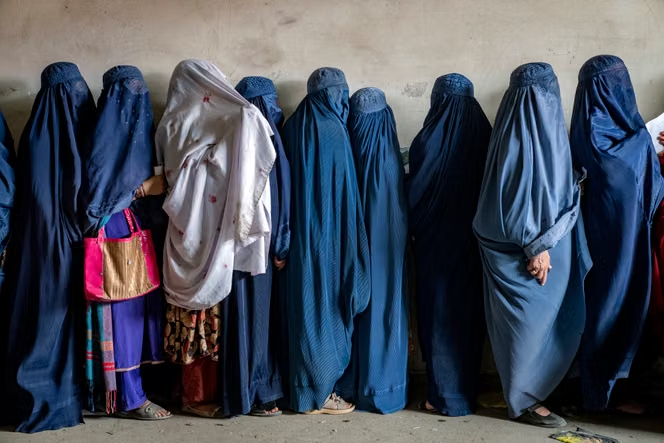
An alarming instruction in Afghanistan’s Balkh province reportedly requires hospitals and clinics to replace women’s real names with a single label. Activists warn that the measure threatens women’s identity, dignity and even their safety when seeking medical treatment.
Imagine arriving at a hospital, needing medical attention, only to discover that your own name is no longer allowed to appear on your prescription.
Not your name. Not your identity. Just a label shared with every other woman.
That is the disturbing reality reported in northern Afghanistan, where Taliban authorities in Balkh province reportedly instructed hospitals, private medical practices and clinics to stop using women's real names and address female patients as “Bibi” instead.
The instruction, reportedly issued in May 2026, extends even to medical prescriptions. An investigation by Afghan media outlet Zan Times and The Guardian, followed by reporting from EL PAÍS and Le Temps, brought the measure into international focus.
For Afghan women, whose freedoms have already been severely restricted since the Taliban returned to power in 2021, the reported order represents another deeply troubling attack on their recognition as individuals.
And the implications could reach far beyond a name written on a medical document.
Key Facts: What Is Happening in Afghanistan?
| Key detail | What has been reported |
|---|---|
| Location | Balkh province, northern Afghanistan |
| Reported timing | May 2026 |
| Authorities involved | Taliban morality officials |
| Reported instruction | Stop using women's real names |
| Replacement term | “Bibi” |
| Where it applies | Hospitals, private practices and clinics |
| Medical documents affected | Patient records and prescriptions |
| Nationwide ban? | No confirmed nationwide extension |
| Main concerns | Identity erasure, humiliation and medical-record confusion |
The reporting describes a local instruction in Balkh. No publicly available copy of a formal written decree was established in the sources reviewed, so the measure should be described as a reported order or directive rather than a verified published national law.
Why Are Afghan Women Being Called “Bibi”?
The word “Bibi” is traditionally used as a respectful form of address in Afghanistan. It can mean “grandmother” or “older woman”.
On its own, the word is not necessarily offensive.
The controversy lies in the reported requirement that it replace the individual names of female patients, regardless of who they are.
A young woman, an elderly patient, a mother or a daughter could all be recorded under the same generic label.
For activists, this is not a harmless administrative change. It is the removal of an individual's identity from the very records that should recognise her.
Afghan activist Lalah Osmany described the wider practice as a “systematic process of dehumanization” in an interview with EL PAÍS.
She also reported that some women have been addressed using degrading animal-related terms, including “goat” and “cow”. These accounts are separate from the reported instruction to use “Bibi”; they should not be confused with the wording of the order itself.
A Medical Prescription Without a Woman's Name: The Dangerous Consequences
The most immediate concern is what happens inside hospitals and clinics.
Medical records are not ordinary paperwork. They identify patients, connect diagnoses with treatment histories and help healthcare professionals ensure that prescriptions reach the correct person.
If numerous women are registered under the same generic name, confusion becomes a serious possibility.
Osmany raised this concern directly, asking readers to imagine a hospital where dozens of prescriptions and medical records are filed under the name “Bibi”.
She warned that the risk of medical errors could be significant.
| Medical record function | Potential concern |
|---|---|
| Patient identification | Different women may share the same recorded name |
| Prescriptions | Medication could be associated with the wrong patient |
| Medical history | Previous diagnoses may be harder to distinguish |
| Follow-up treatment | Matching patients with earlier records could become difficult |
| Accountability | Establishing whose treatment was recorded may become more complicated |
These are potential risks, not confirmed cases of medical errors caused by this specific instruction. However, they illustrate why accurate patient identification matters.
The concerns are especially serious because Afghan women are already facing major obstacles to healthcare.
Women Are Facing Another Healthcare Crisis
The reported naming instruction comes as women encounter restrictions on both sides of the healthcare system: accessing treatment and becoming healthcare professionals themselves.
In November 2026, The Guardian and Zan Times reported that male doctors in several Afghan provinces had received instructions not to examine female patients without specific conditions being met, including the presence of a male guardian.
The investigation included the case of a 37-year-old woman whose dental treatment in Herat was interrupted after a clinic said it could no longer treat her because of an order restricting male dentists from treating women.
The report also highlighted the shortage of female healthcare professionals and restrictions preventing women from studying at medical institutes since December 2024.
This creates a deeply troubling situation: women may struggle to find qualified female doctors, while access to male doctors is also restricted.
The reported use of “Bibi” in medical records adds another layer of concern to an already difficult healthcare environment.
Read the Guardian and Zan Times investigation into restrictions on male doctors treating Afghan women.
From “Where Is My Name?” to Another Fight for Recognition
The struggle over women's names in Afghanistan is not new.
In 2017, Lalah Osmany launched the “Where Is My Name?” campaign, demanding that Afghan women be recognised in official documents, including their children's birth certificates.
For years, women's names were frequently omitted from certain public and family settings. Some were identified through their relationships with male relatives, such as “wife of” or “daughter of”, rather than by their own names.
In September 2020, the government preceding the Taliban's return approved the voluntary inclusion of mothers' names in documents such as children's birth certificates.
It was an important achievement for Afghan women campaigning for recognition.
Now, activists fear that the reported instruction in Balkh could undermine that progress.
Osmany described a woman's name as “a face, a voice, a story” in comments reported by EL PAÍS.
She also recalled the story of an Afghan man who told her he had never known his mother's first name until after she had died.
It is a heartbreaking illustration of how the denial of identity can become normalised, even within families.
Could the Reported Order Spread Across Afghanistan?
For now, the reported instruction concerns Balkh province. There is no confirmed evidence that the same naming restriction has been formally imposed nationwide.
However, activists fear that a measure introduced locally could eventually be extended to other provinces.
Zubaida Akbar, director of the Afghanistan programme at the organisation Femena, told EL PAÍS that she feared a local restriction could be followed by a wider national order.
The concern comes against a broader pattern of restrictions imposed since the Taliban's return to power.
According to UN Women's August 2026 assessment, Taliban authorities had issued more than 100 decrees affecting Afghan women and girls over the preceding five years.
The restrictions cover education, employment, healthcare, movement and participation in public life.
A separate UNAMA human rights update covering July to September 2026 documented arrests and restrictions affecting women and girls, including incidents involving access to public spaces and healthcare facilities.
The reported naming instruction is therefore part of a much wider human-rights crisis, although it remains a distinct local measure.
The Bigger Question: Can a Woman Be Erased Simply by Removing Her Name?
A name connects a person to her family, her medical history, her legal identity and her place in society.
Removing it from official records can have consequences that extend far beyond the immediate humiliation.
The experience of Afghan journalist Khadija Amín, reported by EL PAÍS, illustrates the importance of documentation. Her name was absent from her children's birth certificates. After fleeing Afghanistan, she struggled to establish her legal relationship with her children when she sought help from authorities in Germany.
Her experience demonstrates how missing documentation can become a barrier to exercising fundamental rights.
The reported instruction in Balkh raises an even more disturbing question: what happens when women's names are not simply omitted through custom, but their use is actively restricted by authorities?
For Afghan women, the struggle is no longer only about having their names recognised in public. It is about retaining the right to be identified as individuals.
Frequently Asked Questions
1. Why are Afghan women being called “Bibi”?
Taliban authorities in Balkh province reportedly instructed hospitals and clinics to use “Bibi” instead of women's real names. The term traditionally means “grandmother” or “older woman” and is used as a respectful form of address.
2. Does the reported order apply throughout Afghanistan?
No nationwide extension has been confirmed. The reported instruction concerns Balkh province in northern Afghanistan.
3. Are women's names being removed from medical prescriptions?
Yes. Reports by Zan Times and The Guardian, alongside accounts published by EL PAÍS, say the instruction applies even to medical prescriptions and patient records.
4. Is “Bibi” an insulting word?
Not traditionally. It is generally a respectful form of address. The concern is that authorities reportedly require it to replace individual women's names. Separate testimonies have also described degrading terms being used against some women.
5. Who is Lalah Osmany?
Lalah Osmany is an Afghan women's rights activist who launched the “Where Is My Name?” campaign in 2017, seeking recognition of women's names in official documents.
6. Could replacing names create medical risks?
Yes. Using one generic label for multiple patients could make it harder to distinguish medical records and prescriptions, potentially increasing the risk of confusion.
7. What has the United Nations said about women's rights in Afghanistan?
UN Women has described Afghanistan as facing the world's most severe women's rights crisis. Its 2026 assessment documents extensive restrictions on education, employment, healthcare and public participation.
Final Word: They Are Not Just Names on a Page
Afghan women have spent years fighting for the right to study, work, travel, receive healthcare and participate in public life.
Now, a reported instruction in Balkh has raised another painful question: are they even allowed to keep their names?
A woman is not simply someone's wife, someone's daughter or a patient identified by a generic label. She is an individual with her own history, identity and dignity.
The word “Bibi” may traditionally carry respect. But when it is imposed as a replacement for every woman's name, the meaning changes.
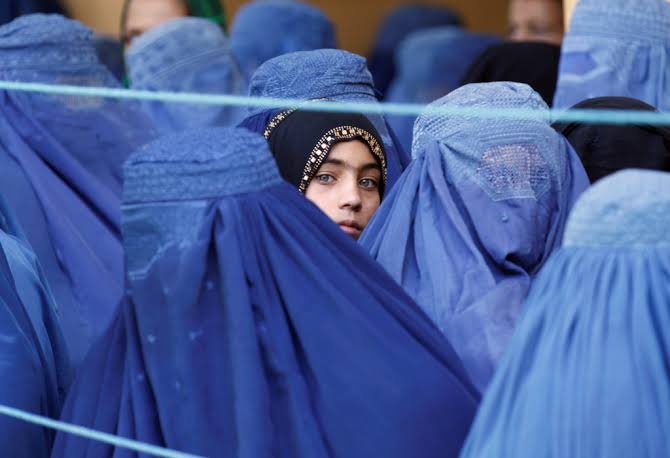
A woman's identity should never have to disappear for her to be recognised.
Filed under
- Afghan Women
- Balkh Province
- Gender Discrimination
- Human Rights
- Tags: Afghanistan
- Taliban
- Women's Rights
- World News
Comments
No comments yet. If you know something about this story that we do not, the newsroom would rather hear it directly — get in touch.